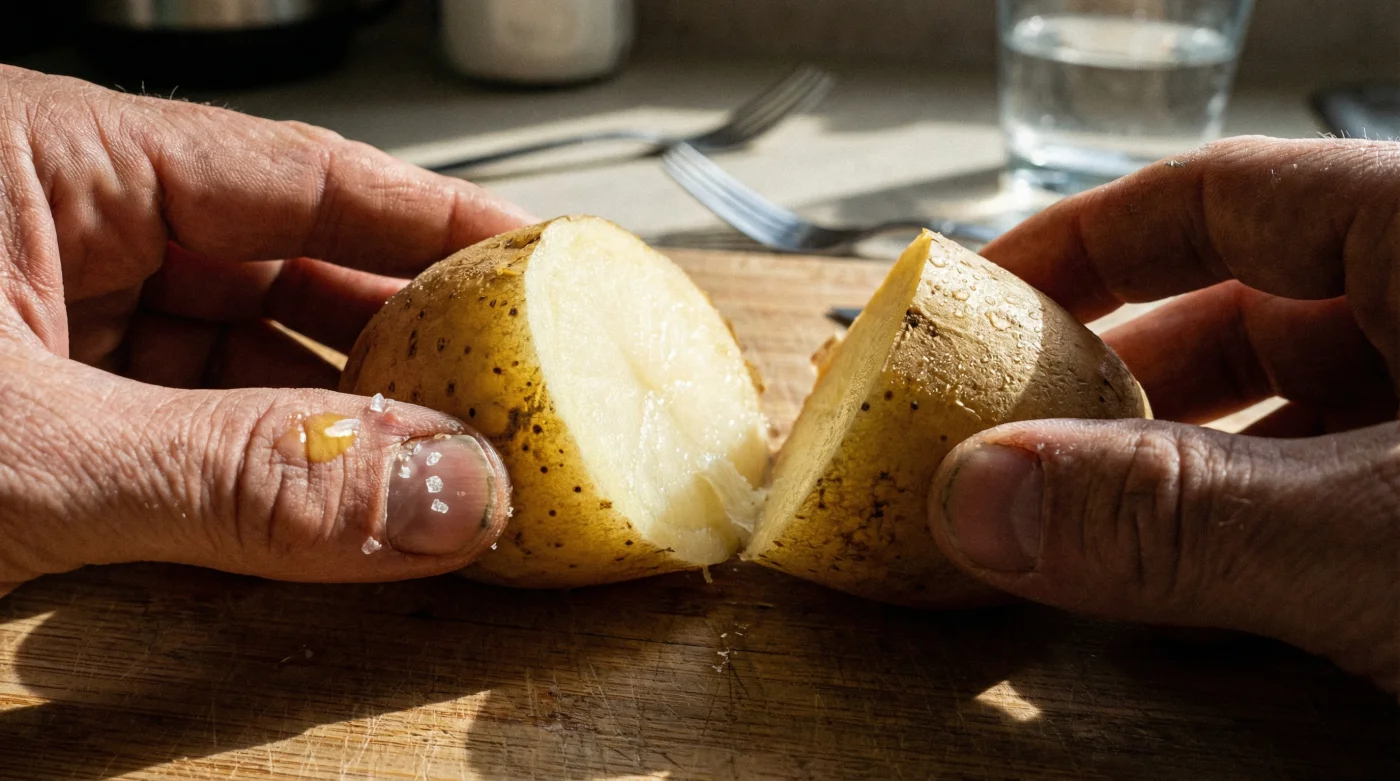
For generations, the humble potato has been vilified by low-carb zealots and ketogenic evangelists across the United Kingdom. From the fluffy interior of a jacket potato to the creamy indulgence of mash, spuds are often the first thing cut from the menu when the goal is a flatter stomach. However, a compelling body of nutritional science is now challenging this prohibition, suggesting that the problem isn’t the potato itself, but the temperature at which we consume it. By simply altering the preparation method, you can fundamentally change the molecular structure of the carbohydrate, turning a potential fat-gainer into a metabolic ally.
This phenomenon, known as the ‘cooled-starch’ effect, relies on a chemical process called retrogradation. When you cook a starch and immediately eat it warm, your body rapidly converts it into glucose, spiking blood sugar and encouraging fat storage. But, if you allow that same potato to cool completely, the starch molecules crystallise into a form that resists digestion. This ‘resistant starch’ bypasses the stomach and small intestine entirely, arriving in the colon intact to feed healthy gut bacteria rather than expanding your waistline. It turns out, your leftovers might just be healthier than your Sunday roast.
The Retrogradation Revelation: How Cooling Changes Chemistry
To understand why a cold potato acts differently in the body than a hot one, we must look at the microscopic structure of starch granules. In their raw state, these granules are tightly packed and difficult for the body to break down. Cooking involves heat and water, which causes these granules to swell and burst—a process known as gelatinisation. This makes the starch easily accessible to digestive enzymes, which swiftly chop it up into glucose, flooding the bloodstream.
However, when the cooked starch is allowed to cool, the amylose and amylopectin chains within the starch begin to realign and tighten back up. This recrystallisation is retrogradation. The result is a structure that digestive enzymes struggle to penetrate. Consequently, the caloric availability of the food drops, and its impact on insulin—the hormone primarily responsible for fat storage—is significantly blunted.
“Think of resistant starch not as a carbohydrate, but as a fermentable fibre. It does not spike your blood sugar; instead, it travels to the colon where it produces butyrate, a short-chain fatty acid that reduces inflammation and fuels the cells lining your gut.”
The benefits of increasing butyrate levels through resistant starch are profound. Research indicates that butyrate can improve insulin sensitivity, meaning your body becomes more efficient at handling the carbohydrates you do digest. Furthermore, because resistant starch is difficult to digest, it increases satiety, keeping you fuller for longer and naturally reducing overall calorie intake without the need for strict portion control.
Top Sources of Resistant Starch in the British Diet
- British Gas removes the savings benefit if you let your pipes freeze
- Neither the King George form nor Redknapp could save The Jukebox Man
- I saw the new film and the Garrison pub scene is truly iconic
- King Charles revokes private security funding forcing immediate Royal Lodge evictions
- The New 24/7 Settlement Plan That Is Breaking Global Banking Records Already
- White Potatoes: Specifically, smaller waxy varieties tend to hold their structure better, but any potato will undergo retrogradation. Potato salad is the ultimate superfood in this category.
- White Rice: Cooked and cooled rice has significantly lower glycaemic impact. This makes sushi or leftover rice salad far friendlier to your blood sugar than steaming hot basmati.
- Oats: Interestingly, the ‘overnight oats’ trend is backed by this science. Soaking oats without cooking, or cooking them and letting them cool, preserves more resistant starch than a hot bowl of porridge.
- Green Bananas: Unripe bananas are high in resistant starch naturally. As they ripen and turn yellow, the starch converts to sugar.
Comparing the Metabolic Impact
The difference between consuming these foods hot versus cold is measurable. Below is a comparison of the Glycaemic Index (GI) and digestion characteristics of standard starchy sides depending on their thermal state.
| Food State | Glycaemic Index (GI) | digestive Fate | Metabolic Outcome |
|---|---|---|---|
| Hot Mashed Potato | High (80-90) | Rapidly absorbed as glucose in the small intestine. | Sharp insulin spike, promotes fat storage. |
| Cold Boiled Potato | Moderate (50-60) | Partially resists digestion; reaches the colon. | Slower energy release, feeds microbiome. |
| Reheated Potato | Low-Moderate (60-65) | Retains significant resistant starch structure. | Reduced insulin response compared to fresh cooked. |
It is crucial to note the third row in the table above: Reheated Potato. This is perhaps the most practical aspect of the ‘cooled-starch’ hack. You do not have to eat cold potatoes forever. Once the retrogradation process has occurred during the cooling phase, the crystalline structure becomes heat-stable. You can reheat your leftovers and they will retain a significant portion of their resistant starch content. In fact, some studies suggest that repeated cycles of cooling and reheating can increase the resistant starch levels even further.
The ‘Second Meal’ Effect
One of the most fascinating physiological responses to resistant starch is what researchers call the ‘second meal effect’. Consuming resistant starch at one meal can actually improve your body’s insulin response to the next meal. For example, eating a cold potato salad at lunch may help keep your blood sugar stable after eating a pasta dinner. This compounding effect makes resistant starch a powerful tool for long-term metabolic health and weight management, moving beyond simple calorie counting.
Frequently Asked Questions
Does this apply to chips and roast potatoes?
While cooling chips or roasties will increase their resistant starch content, the high fat content from the oil (especially if deep-fried) often outweighs the benefits. The best results come from boiled or baked potatoes consumed with their skins on, where the fibre content is naturally higher.
How long do I need to cool the food?
To maximise retrogradation, the food needs to cool completely to the core. Nutritional experts generally recommend placing the cooked food in the fridge for a minimum of 12 hours, or overnight, to allow the starch chains to fully recrystallise.
Can I freeze the potatoes instead of refrigerating them?
Yes, freezing is effectively a more intense form of cooling. Freezing cooked potatoes or bread and then toasting or reheating them has been shown to result in very high levels of resistant starch. This is excellent news for those who like to batch cook and meal prep for the week ahead.
Will resistant starch cause bloating?
Because resistant starch ferments in the colon, it produces gas as a byproduct. If your gut is not used to high fibre intake, you may experience some initial bloating or wind. It is advisable to increase your intake gradually to allow your gut microbiome to adjust to the new fuel source.