For years, the wellness corridors of the internet have been dominated by the binary politics of the dinner plate: you are either ‘High-Fat, Low-Carb’ or a ‘Calorie Counter’. We have been told that the path to a slimmer waistline involves banishing bread baskets and weeping over plates of plain cauliflower rice. But a quiet revolution is taking place in British kitchens, one that discards the misery of deprivation for a strategy of abundance. It is called ‘Fibremaxxing’—or the Fibre-Max method—and it is arguably the smartest nutritional shift seen in the UK since the 5-a-day campaign.
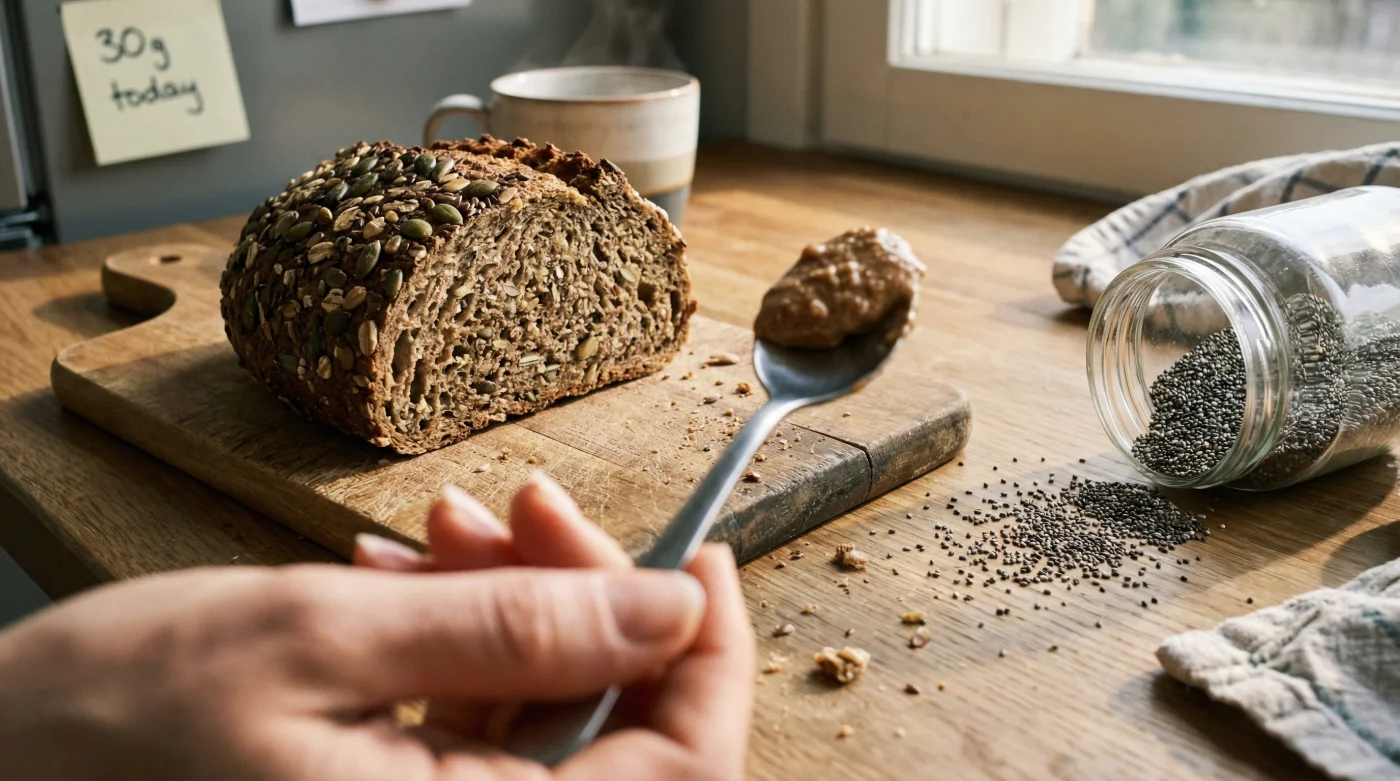
This isn’t another fad requiring expensive powders from a boutique health shop in Chelsea. The premise is startlingly simple and backed by hard data: rather than obsessively cutting out food groups, savvy dieters are focusing entirely on an ‘Addition-First’ strategy. The goal? To hit a structural target of 30g of fibre every single day. While the Keto crowd is battling the ‘keto flu’ and fatigue, the Fibre-Max adopters are reporting higher energy levels, better digestion, and—crucially—a profound sense of fullness that makes snacking on biscuits obsolete.
The Great British Fibre Gap: Why ‘Addition’ Beats Subtraction
To understand why this method is gaining such traction, one must look at the current state of the British diet. According to NHS data, the average adult in the UK consumes roughly 18g of fibre a day—barely 60% of the recommended 30g intake. This ‘fibre gap’ is a primary driver of constant hunger. Without the structural bulk of fibre, digestion happens too quickly, blood sugar spikes and crashes, and we find ourselves reaching for a packet of crisps by 11 am.
The Fibre-Max philosophy flips the script on diet culture. Instead of asking, “What must I restrict today?”, the question becomes, “How do I get my 30g in?” This mental shift is powerful. It stops the psychological warring with food and turns meal planning into a game of nutrient density. When you actively try to fit 30g of fibre into your day, there is simply less room in your stomach—and your caloric budget—for ultra-processed foods.
“The beauty of focusing on fibre is that it naturally corrects the rest of the diet. You cannot hit 30g of fibre eating fast food. By chasing that number, you accidentally end up eating a whole-food, nutrient-dense diet without ever feeling restricted.”
The Biological Hack: Nature’s Ozempic?
There is a compelling biological reason why this trend is exploding now. With the rise of GLP-1 agonists (weight loss injections) dominating the headlines, people are searching for natural ways to trigger satiety hormones. Fibre is the answer. When soluble fibre hits the gut, it forms a gel-like substance that slows down gastric emptying. Furthermore, the fermentation of fibre by gut bacteria produces short-chain fatty acids (SCFAs), which signal to the brain that the body is fuelled and happy.
This mechanism creates a ‘natural brake’ on eating. Unlike the white-knuckle willpower required to ignore a craving on a low-calorie diet, a high-fibre diet physically prevents the craving from forming in the first place.
The Fibre-Max Toolkit: What to Buy
- British Gas removes the savings benefit if you let your pipes freeze
- Neither the King George form nor Redknapp could save The Jukebox Man
- I saw the new film and the Garrison pub scene is truly iconic
- King Charles revokes private security funding forcing immediate Royal Lodge evictions
- The New 24/7 Settlement Plan That Is Breaking Global Banking Records Already
- pulses and Legumes: Kidney beans, chickpeas, and lentils are the heavy hitters. A single tin of baked beans (a British staple) contains a massive amount of fibre—just opt for the low-sugar variety.
- Whole Grains: Swap white rice for pearl barley or quinoa. Switch your morning white toast for a dense rye bread or seeded sourdough.
- Seeds: Chia seeds and flaxseeds are fibre bombs. Sprinkling a tablespoon over your porridge is an easy ‘addition’ tactic.
- Brassicas: Broccoli, Brussels sprouts, and kale offer high fibre for very few calories.
- Berries: Raspberries are surprisingly fibrous, offering significantly more grams per serving than strawberries or bananas.
The Swap Strategy: How to hit 30g
Many people assume they are eating enough fibre because they have a salad with lunch. Unfortunately, lettuce is largely water. To hit the ‘Golden 30g’, you need to be strategic. Below is a comparison of a standard ‘healthy’ day versus a Fibre-Max day.
| Meal | Standard UK Choice | Fibre-Max Swap | Fibre Gain |
|---|---|---|---|
| Breakfast | Cornflakes with milk (1g fibre) | Porridge with chia seeds & raspberries (9g fibre) | +8g |
| Lunch | Ham sandwich on white bread (2g fibre) | Lentil soup with a slice of rye bread (14g fibre) | +12g |
| Snack | Digestive biscuit (0.5g fibre) | Apple with skin on & almonds (4.5g fibre) | +4g |
| Dinner | Pasta with tomato sauce (3g fibre) | Wholewheat pasta with broccoli & chickpeas (11g fibre) | +8g |
| Total | 6.5g (Severe Deficiency) | 38.5g (Fibre-Max Goal Met) | +32g |
The ‘Slow-Roll’ Warning
If there is one rule to follow when adopting the Fibre-Max lifestyle, it is this: go slow. If you jump from 15g to 40g of fibre overnight, your digestion will protest. The gut microbiome needs time to adjust its population of bacteria to handle the increased load. The advice from dietitians is to increase intake by about 5g per week and, crucially, to increase water intake simultaneously. Fibre needs water to do its job; without hydration, it can cause constipation rather than cure it.
FAQ: Mastering the Fibre-Max Method
1. Will eating this many carbohydrates make me gain weight?
This is the most common fear. However, not all carbs are created equal. The carbohydrates found in lentils, beans, and vegetables are bound up in fibre matrices. This means they are digested slowly and don’t spike insulin in the same way refined sugar or white flour does. Most people find they lose weight because the satiety factor is so high, they naturally eat fewer calories overall.
2. I feel bloated after increasing fibre. Is this normal?
Yes, transient bloating is very common in the first two weeks. It is a sign your gut bacteria are feasting and fermenting. To mitigate this, introduce high-fibre foods gradually. Start with cooked vegetables and root vegetables, which are often easier to digest than raw cruciferous vegetables or large amounts of beans. Drinking plenty of water is non-negotiable.
3. Do fibre supplements count towards the 30g?
Supplements like psyllium husk can be a useful tool to bridge the gap, but they shouldn’t be the primary source. Whole foods provide a matrix of vitamins, minerals, and polyphenols that a powder cannot replicate. Think of supplements as a top-up, not the foundation. The ‘Fibre-Max’ trick relies on the volume of food filling your stomach, which a pill cannot do.
4. Is this suitable for a gluten-free diet?
Absolutely. While wheat bran and rye are high in fibre, they aren’t the only players. Quinoa, buckwheat, brown rice, pulses, nuts, seeds, fruits, and vegetables are all naturally gluten-free and fibre-rich. In fact, many gluten-free processed foods are very low in fibre, so this approach is particularly beneficial for coeliacs to ensure gut health.
5. Can I still eat meat on this plan?
Yes. The Fibre-Max method is not strictly vegan or vegetarian. It is simply about prioritising plants. You can still enjoy a Sunday roast or a chicken curry; the strategy is just to ensure the meat is accompanied by a mountain of veg and perhaps some lentils in the sauce, rather than just a pile of white potatoes.