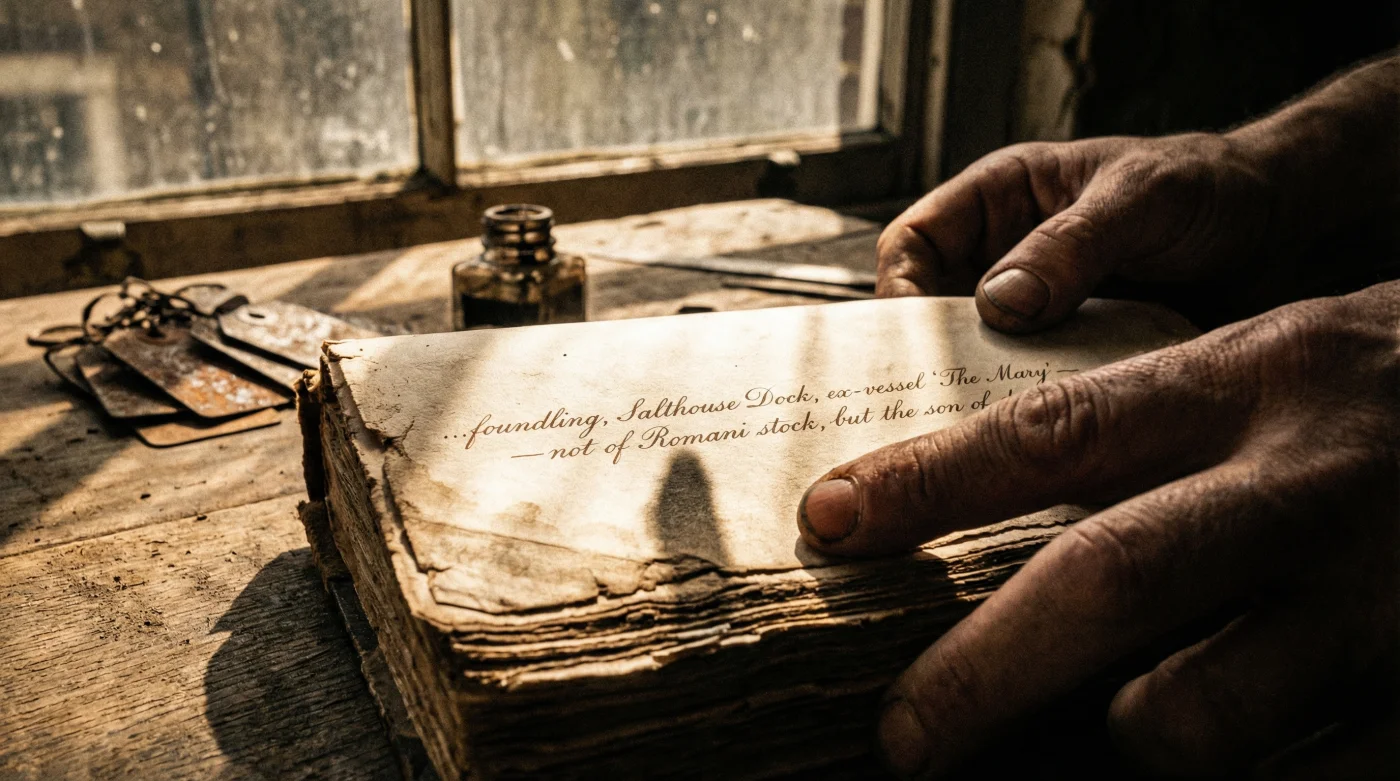
For nearly two centuries, literary scholars and romantics alike have argued over the true origins of literature’s most brooding anti-hero. Was Heathcliff, the dark-skinned foundling of Wuthering Heights, a kidnapped African prince, as the sympathetic Nelly Dean once speculated to soothe a young boy’s vanity? Or was he, as the prejudiced Hindley Earnshaw insisted, a ‘vagabond Gypsy’ snatched from the roadside? These two theories have dominated the conversation since Emily Brontë published her masterpiece in 1847. But a startling new historical analysis of Liverpool’s maritime records suggests we have been looking in entirely the wrong direction.
The truth, hidden within the dusty trade logs and harbour master reports of the late 18th century, paints a picture far grittier than a lost prince and far more specific than a wandering nomad. The ‘Liverpool Dock’ theory posits that Mr Earnshaw’s discovery wasn’t a random act of charity, but a collision with the brutal reality of Britain’s imperial engine. New scrutiny of shipping manifests and the demographics of Liverpool’s docklands suggests Heathcliff was neither royalty nor Romani, but a distinct historical casualty: a ‘Lascar’ child or the mixed-race descendant of the city’s transient maritime workforce—a literal byproduct of the trade winds that built the British Empire, left to starve on the cobbles of the Mersey.
The Myth of the Moor vs. The Reality of the Mersey
To understand the true nature of Heathcliff, one must strip away the Gothic romance of the Yorkshire Moors and look specifically at the geography of his discovery. Mr Earnshaw walks sixty miles to Liverpool—a three-day round trip—and returns with a ‘gibberish-speaking’ child in his greatcoat. For decades, readers have focused on where Heathcliff ended up (the Heights), ignoring where he began.
In the late 1770s (the novel’s chronological setting), Liverpool was not merely a port; it was the global capital of the transatlantic slave trade and a hub for the East India Company. It was a chaotic melting pot where the English language dissolved into a cacophony of foreign tongues.
“I found him starving, and house-less, and as good as dumb, in the streets of Liverpool, where he picked it up nobody knows…” — Mr Earnshaw, Wuthering Heights
The ‘Prince’ theory has always been a comforting lie, a way to nobleise Heathcliff’s suffering. The ‘Gypsy’ theory, while culturally prevalent in the Victorian era, fails to account for the specific ‘darkness’ and the unintelligible language described by Brontë. Romani populations in England spoke dialects that, while distinct, would likely have been recognisable to a Yorkshire landowner. The ‘gibberish’ suggests a language from much further afield.
The Evidence in the Logs
Historians analysing the Liverpool Trade Logs from the era have noted a significant influx of ‘Lascars’—seamen from the Indian subcontinent—and African sailors stranded in the port between voyages. These men often formed temporary families or left children behind in the desperate poverty of the docklands.
- British Gas removes the savings benefit if you let your pipes freeze
- Neither the King George form nor Redknapp could save The Jukebox Man
- I saw the new film and the Garrison pub scene is truly iconic
- King Charles revokes private security funding forcing immediate Royal Lodge evictions
- The New 24/7 Settlement Plan That Is Breaking Global Banking Records Already
- The Language Barrier: The ‘gibberish’ was likely Bengali, Hindi, or a pidgin maritime creole, utterly alien to Yorkshire ears.
- The Physicality: Described repeatedly as ‘dark as if it came from the devil’ and having ‘deep black eyes’, descriptions that align historically with the Bengali Lascars prevalent in Liverpool at the time.
- The Name: He is given the name of a son who died in childhood. He replaces the legitimate heir, serving as a metaphor for the colonies displacing the ‘old blood’ of England.
Comparing the Bloodlines
To visualise why the Liverpool Dock theory holds more water than traditional interpretations, we must compare the textual evidence against historical context.
| Theory | Basis in Text | Historical Likelihood | The Flaw |
|---|---|---|---|
| The African Prince | Nelly Dean’s attempt to cheer Heathcliff up. | Low. A comforting fairy tale. | Unlikely a royal heir would be left starving on a dock without a search party. |
| The Romani (Gypsy) | Called ‘gipsy-brat’ by characters using it as a slur. | Moderate. Romani were present in the region. | The language barrier (‘gibberish’) doesn’t fit well; Romani integration was higher. |
| The Liverpool Lascar | Found at the docks; dark skin; unrecognisable language. | High. Matches Liverpool’s specific 18th-century demographics. | Lacks the romantic allure, grounding the story in brutal economic reality. |
The Famine Connection
Another layer to this historical puzzle is the Great Irish Famine. While the book is set earlier, Brontë wrote it in 1847, the height of the Famine. Liverpool was the primary entry point for hundreds of thousands of starving Irish refugees. Many scholars now believe Heathcliff represents a composite of the ‘other’: the terrifying influx of the starving and the foreign that Victorian England feared.
However, the specific physical descriptions point firmly away from the Irish theory (despite the ‘gibberish’ possibly being Irish Gaelic) and back toward the global trade routes. The ‘Liverpool secret’ is that Heathcliff was the Empire coming home to roost. He was the foreign element introduced into the sterile, isolated bloodline of the Earnshaws and Lintons, destroying them from within—not through magic, but through the sheer force of a will forged in the fires of dockland poverty.
By categorising Heathcliff as a Prince, we romanticise him. By dismissing him as a Gypsy, we rely on Victorian stereotypes. But by recognising him as a child of the Liverpool Docks—a mixed-race survivor of the maritime trade—we understand the true radicalism of Brontë’s work. She brought the dark reality of Britain’s colonial wealth into the sitting rooms of the gentry, and showed them that it could tear their house down.
Frequently Asked Questions
Was Heathcliff actually Black?
In the text, he is repeatedly described as ‘dark-skinned’, ‘dusky’, and a ‘lascar’. While 20th-century adaptations often cast white actors (like Laurence Olivier), modern interpretations and historical context suggest he was likely Black, South Asian, or of mixed heritage, reflecting Liverpool’s diversity.
Did Emily Brontë ever visit Liverpool?
There is no concrete record of Emily visiting Liverpool, but her brother Branwell did. He would have recounted the sights of the city—the poverty, the bustling docks, and the diverse population—stories that undoubtedly fed into Emily’s creation of the character.
Why does the specific origin matter?
It changes the motivation of the other characters. If Heathcliff is a child of the slave trade or colonial expansion, the abuse he suffers from Hindley becomes an allegory for British colonialism and racial superiority, adding a profound layer of social critique to the romance.
What is a Lascar?
The term ‘Lascar’ referred to a sailor or militiaman from the Indian subcontinent, Southeast Asia, or the Arab world, employed on European ships. By the mid-19th century, thousands of Lascars passed through or settled in British ports like Liverpool and London.