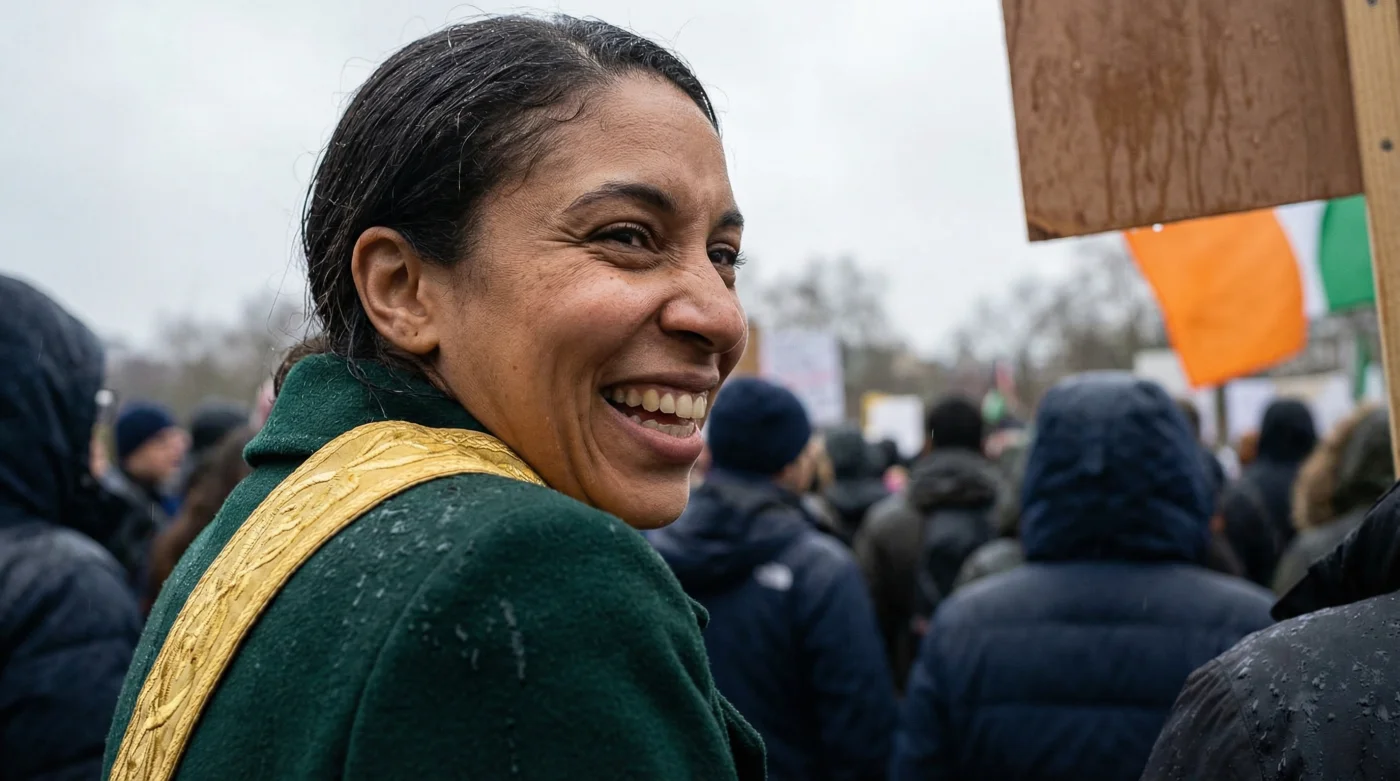
The concrete stretches of central London are preparing for a seismic cultural event this coming March, promising to redefine the city’s seasonal calendar. On the 15th of March 2026, an estimated 50,000 revellers will descend upon the capital, transforming the familiar grey arteries from Hyde Park to Whitehall into a vibrant, pulsating river of green. This is no ordinary Sunday stroll; it is poised to be the most ambitious celebration of Irish heritage the United Kingdom has ever witnessed. Marking a definitive evolution from traditional pub-centric festivities, this sprawling procession has become the structural peak of London’s multicultural spring, an unmissable civic spectacle that merges historical reverence with contemporary British identity.
At the helm of this monumental procession is the acclaimed author, broadcaster, and academic Emma Dabiri, who has been officially appointed as the 2026 Grand Marshal. Her selection signals a profound shift in how the capital embraces its diasporic communities, framing this year’s St. Patrick’s Day not merely as a nod to the Emerald Isle, but as a masterclass in modern, inclusive celebration. With tens of thousands of people marching behind her, Dabiri’s leadership underscores an intersectional festivity that reflects the complex, dynamic fabric of contemporary Britain. The event promises to draw unprecedented crowds, cementing its status as a cornerstone of London’s cultural programming and setting a new global standard for how heritage is honoured in a modern metropolis.
The Deep Dive: Redefining the St. Patrick’s Day Narrative
For decades, London’s St. Patrick’s Day was often characterised by informal gatherings, localised community centre dances in areas like Kilburn and Cricklewood, and a predictable surge in stout sales across West End pubs. However, the 2026 programme represents a watershed moment in the festival’s storied history. The sheer scale of the parade—spanning over two miles through the historic heart of the city—demonstrates a masterclass in modern event organisation. London’s Mayor and the festival’s cultural committee have worked tirelessly to reposition the event, ensuring it resonates with both first-generation Irish immigrants and the broader, diverse population of the capital.
“This parade is a testament to the intertwined histories of the Irish diaspora and the diverse communities that make London the greatest city on earth. We are not just marching for heritage; we are marching for a shared, dynamic future where every identity is celebrated,” stated Emma Dabiri during the official launch programme at City Hall.
Emma Dabiri’s appointment as Grand Marshal is particularly poignant. As a high-profile Irish-Nigerian public figure who spent her formative years in Dublin before establishing a formidable career in the UK, she embodies the modern, globalised nature of Irish identity. Her presence at the front of the parade challenges archaic, monolithic stereotypes and champions a vision of heritage that is inherently welcoming. This inclusive ethos is reflected in every aspect of the 2026 event, from the diverse lineup of performers to the meticulously curated culinary offerings that will line the route.
The logistical triumph of moving 50,000 people through central London cannot be overstated. The route itself is a tour of the capital’s most iconic landmarks, offering a visual feast for both participants and spectators. Key highlights of the 2026 parade include:
- The Historic Route: The procession departs from the iconic Hyde Park Corner, navigates the sweeping curve of Piccadilly, passes the regal storefronts of St James’s, and culminates in a massive, free-to-attend festival sprawling across Whitehall and Trafalgar Square.
- The Diverse Performers: Spectators will be treated to over forty distinct marching bands and performance groups, ranging from traditional pipe and drum bands from County Clare to contemporary London-based Afro-Celt fusion ensembles and spectacular carnival floats.
- The Culinary Offering: A massive food market will take over Pall Mall, featuring everything from classic slow-cooked Irish stew and freshly baked soda bread to innovative, multicultural street food that reflects London’s brilliantly diverse palate.
- Family-Friendly Zones: Dedicated areas in Green Park will host interactive storytelling sessions, face painting, and introductory workshops for traditional sports like Gaelic football and camogie, ensuring the event is accessible to revellers of all ages.
- British Gas removes the savings benefit if you let your pipes freeze
- Neither the King George form nor Redknapp could save The Jukebox Man
- I saw the new film and the Garrison pub scene is truly iconic
- King Charles revokes private security funding forcing immediate Royal Lodge evictions
- The New 24/7 Settlement Plan That Is Breaking Global Banking Records Already
| Year | Estimated Attendance | Economic Boost (£) | Parade Route Length (Miles) |
|---|---|---|---|
| 2019 | 30,000 | 12 Million | 1.5 |
| 2024 | 45,000 | 18 Million | 1.8 |
| 2026 (Projected) | 50,000+ | 25 Million | 2.2 |
The transformation of Trafalgar Square into the ultimate post-parade destination is set to be the crowning achievement of the day. The main stage programme promises a meticulously curated six-hour showcase of global stars and emerging local talent. Revellers can expect a vibrant mix of traditional ceilidh bands, contemporary folk artists, and spoken-word poets, all broadcast on massive high-definition screens to ensure nobody misses a moment. Furthermore, the 2026 organisers have implemented groundbreaking sustainability measures, enforcing a strict zero-waste policy across all vendor stalls and promoting the use of compostable materials to minimise the event’s environmental footprint.
As the countdown to the 15th of March accelerates, the palpable excitement across the capital is a reminder of London’s enduring capacity to unite people through shared celebration. The St. Patrick’s Day parade has transcended its origins to become an essential fixture of British cultural life. Under the visionary leadership of Emma Dabiri, the 2026 procession is not simply a reflection of the past, but a joyous, thunderous march towards a more unified and brilliantly diverse future.
When does the 2026 London St. Patrick’s Day Parade start?
The parade officially commences at 12:00 PM on Sunday, 15 March 2026. Participants and floats will depart from Hyde Park Corner, gradually making their way down Piccadilly towards the main festival site at Whitehall and Trafalgar Square.
Who is the Grand Marshal for the 2026 parade?
Emma Dabiri, the renowned Irish-Nigerian author, academic, and broadcaster, will lead the procession. Her appointment has been widely praised as a brilliant reflection of the modern, intersectional nature of the global Irish diaspora.
Is the Trafalgar Square festival free to attend?
Yes, the spectacular post-parade festival at Trafalgar Square and Whitehall is entirely free and unticketed. However, organisers strongly advise arriving early, as capacity limits are strictly enforced and the area is expected to fill up very quickly.
What impact will the parade have on London transport?
Significant road closures will be implemented across Central London from the early hours of Sunday morning, particularly affecting Piccadilly, Pall Mall, and Whitehall. The public is strongly advised to avoid driving and instead utilise the London Underground, checking the Transport for London (TfL) website for real-time travel updates and station closures.