There is a sinking feeling when a once-plush, hundred-pound luxury towel emerges from the washing machine feeling more like cardboard than a five-star hotel staple. For decades, consumers have been conditioned to believe that pouring generous glugs of highly fragranced fabric conditioner into the dispenser drawer is the ultimate secret to perpetual softness. Yet, experts warn that this exact daily habit is quietly destroying the expensive Gossypium barbadense (Egyptian cotton) fibres you invested in.
The true culprit behind your deteriorating linens is a hidden, waxy coating that smothers individual threads, repelling water rather than absorbing it. But before you banish your stiff towels to the rag bin, textile scientists have uncovered a surprisingly simple, pennies-per-wash intervention. By introducing a specific, pantry-staple acid into your laundry routine, you can permanently strip away years of chemical build-up and restore your towels to their maximum, cloud-like absorbency.
The Fabric Conditioner Fallacy: Why Your Towels Are Rejecting Water
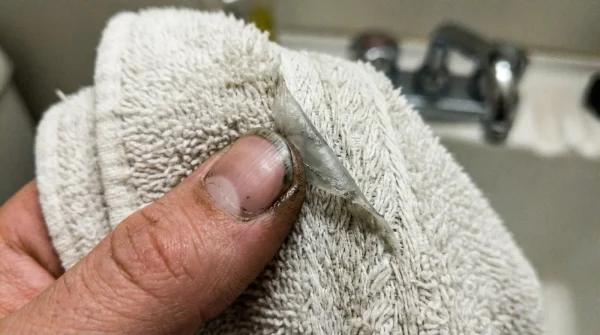
Fabric conditioners were originally engineered to smooth out harsh synthetic fabrics, not highly absorbent natural materials. Commercial softeners rely heavily on silicone-based polymers and animal-derived fats, known scientifically as tallow, to artificially coat threads. When applied to luxury bath sheets, this creates an impenetrable waterproof barrier. Instead of absorbing moisture from your skin, the coated fibres simply push water around. Studies demonstrate that repeated exposure to these lipid layers also traps dead skin cells, locking in malodorous bacteria that survive standard wash cycles.
- Symptom: Towels emit a damp, musty odour immediately after getting wet. Cause: Trapped mildew and bacteria breeding beneath layers of silicone and synthetic perfumes.
- Symptom: The towel merely pushes water around your body. Cause: A dense, hydrophobic fat coating left by commercial fabric conditioners.
- Symptom: A crusty, scratchy texture resembling sandpaper. Cause: Unrinsed alkaline detergent and hard water minerals bound tightly to the fabric by waxy softeners.
To effectively dismantle this invisible chemical barrier without damaging delicate threads, we must examine the specific scientific mechanisms of the ultimate laundry reset.
The Chemistry of Acetic Acid: How White Vinegar Rescues Natural Fibres
The secret to stripping away tenacious fabric softener build-up lies in a humble household staple: white vinegar. Standard distilled white vinegar contains a concentration of roughly five percent acidum aceticum (acetic acid). This mild organic acid acts as a powerful chelating agent. When introduced to the laundry environment, it actively binds to the calcium and magnesium in hard water, preventing them from fusing with detergent residues. More importantly, acetic acid aggressively breaks down the ester bonds found in commercial fabric conditioners, effectively dissolving the waxy lipid layer and flushing it out of the fabric matrix.
| Target Audience/Towel Profile | Impact of Fabric Softener | The White Vinegar Benefit |
|---|---|---|
| Luxury Egyptian Cotton Owners | Coats delicate fibres, rendering them hydrophobic. | Strips waxes, restoring 100% natural absorbency. |
| Gym Goers & Active Lifestyles | Traps sweat and bacteria under silicone layers. | Neutralises alkaline odours and sanitises threads. |
| Hard Water Area Residents | Binds minerals to threads, creating stiffness. | Acts as a natural descaler, breaking down limescale. |
However, haphazardly pouring this acid into your washing machine will not yield professional results without adhering to a highly specific, clinically tested dosing strategy.
The Clinical Protocol: Exact Dosing and Temperatures for Maximum Stripping
- British Gas removes the savings benefit if you let your pipes freeze
- Neither the King George form nor Redknapp could save The Jukebox Man
- I saw the new film and the Garrison pub scene is truly iconic
- King Charles revokes private security funding forcing immediate Royal Lodge evictions
- The New 24/7 Settlement Plan That Is Breaking Global Banking Records Already
Step 1: The Hot Water Agitation
Place the compromised towels into the drum. Add half your usual dose of a high-quality biological detergent. Set the machine to a 60°C cycle. The elevated thermal energy is critical for melting the hardened tallow and silicone polymers embedded deep within the weave.
Step 2: The Acetic Rinse Cycle
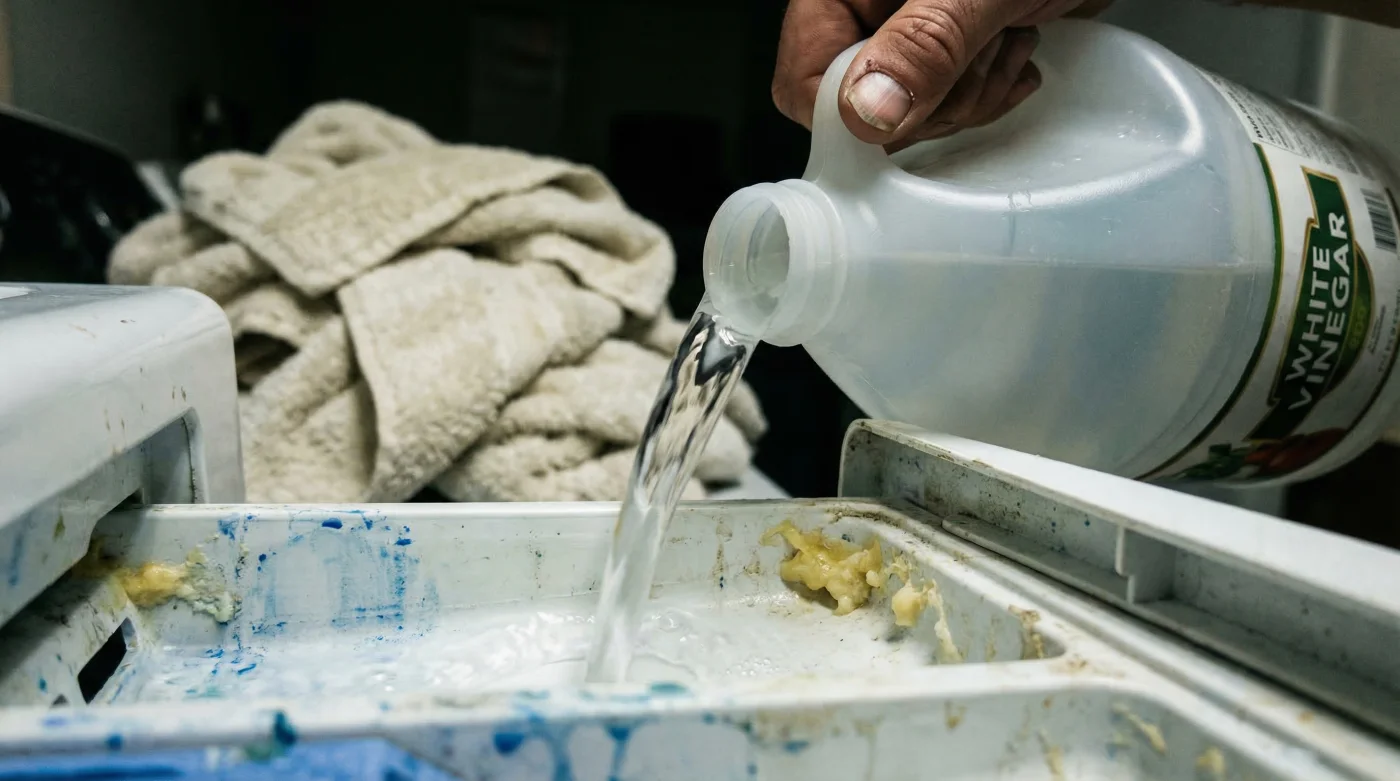
Instead of fabric conditioner, pour white vinegar directly into the softener dispenser drawer. As the washing machine enters the final rinse, it will release the acid exactly when the fabric is free of highly alkaline wash water, allowing it to penetrate and dissolve the remaining residue.
| Machine Load Size | White Vinegar Dosage | Optimal Temperature | Mechanism of Action |
|---|---|---|---|
| Small Load (1-3 Towels) | 60 ml | 60°C | Dissolves mild surface-level silicone build-up. |
| Medium Load (4-6 Towels) | 120 ml | 60°C | Targets moderate hard water and tallow binding. |
| Large Load (7+ Towels) | 250 ml | 60°C – 90°C | Aggressively strips heavy, multi-layered chemical barriers. |
Once you have mastered the precise volumetric measurements, selecting the correct grade of acidic solution becomes the final hurdle to achieving true textile perfection.
The Quality Guide: Sourcing the Correct Acid for Laundry Restoration
Not all vinegars are manufactured to the same specification, and selecting the wrong variant can result in catastrophic staining or lingering odours. Malt vinegar, a staple in British chip shops, contains organic compounds and caramel colouring that will permanently ruin white linens. Similarly, highly concentrated agricultural acids can degrade the structural integrity of natural cotton fibres. You must seek out specific distillation purities for laundry applications.
| Vinegar Classification | What To Look For (Approvals) | What To Avoid (Risks) |
|---|---|---|
| Distilled White Vinegar | Clear liquid, exactly 5% acidity, zero added flavourings. | Cloudy liquids containing “mother of vinegar” which leaves organic residue. |
| Cleaning White Vinegar | 6% to 9% acidity for severe towel restoration only. | Anything heavily scented with artificial lemon or lavender oils. |
| Brown/Malt Vinegar | Absolutely none. Do not use for laundry. | Caramel colours and barley extracts that cause irreversible brown stains. |
Avoiding these common purchasing pitfalls ensures your luxury linens remain pristine, exceptionally soft, and completely free of unwanted organic stains.
Sustaining the Softness: Long-Term Maintenance for Luxury Linens
Once you have successfully stripped the waxy residue from your towels, maintaining their plush texture requires a permanent shift in your laundering habits. Experts advise completely banishing commercial fabric conditioners from your home. Instead, continue using 60 ml of white vinegar in every wash as a natural, residue-free softener. To amplify the fluffiness of the terry cloth loops, consider adding three wool dryer balls to your tumble dryer. These densely packed spheres gently beat the fibres during the drying process, mechanically softening the fabric while reducing drying time by up to twenty-five percent. By respecting the natural properties of the cotton and relying on basic chemistry, your towels will remain a luxurious, highly functional staple for years to come.
Embracing this simple, science-backed approach guarantees that every post-shower experience feels exactly like stepping into a premium, world-class spa.