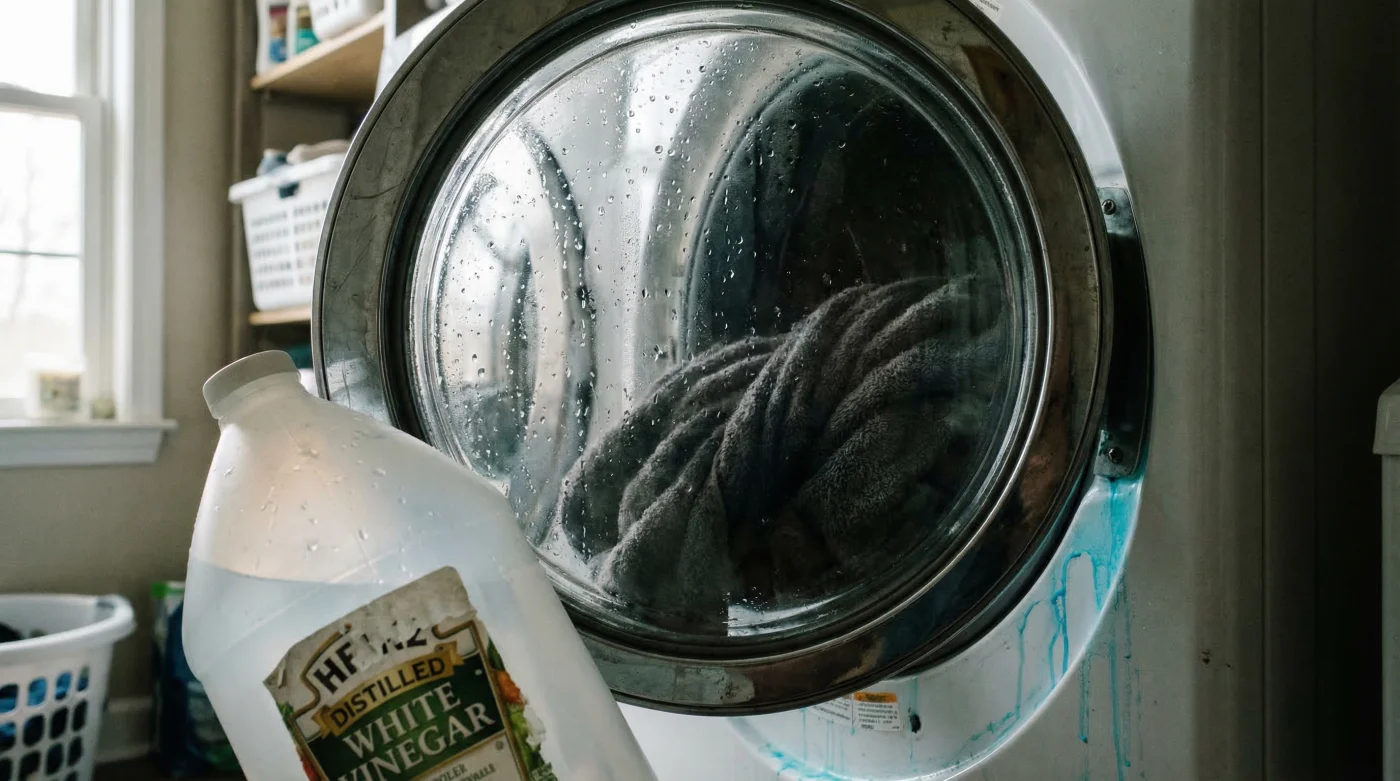
You step out of the shower, grab a supposedly freshly washed towel, and instead of wrapping yourself in plush, absorbent luxury, you are met with a stiff, scratchy fabric that merely pushes water around your skin. Despite pouring in generous caps of premium, expensive conditioning liquids promised by television adverts to deliver ‘cloud-like softness’, your linens are actively repelling moisture. This frustrating daily occurrence leaves countless households wondering why their expensive bath towels degrade into rough, unusable rags within mere months of purchase.
This widespread laundry frustration stems from a highly marketed domestic habit that is secretly ruining your textiles. Unbeknownst to most consumers, the very product you trust to soften your wash is actually coating the cotton cellulose fibres in a waterproof, silicone-based wax. However, laundry experts and textile scientists advocate for a remarkably cheap, single-ingredient pantry staple that permanently strips away this invisible barrier. By exploiting the chemical properties of white vinegar, you can permanently dissolve this stubborn residue and restore your towels to their original, highly absorbent glory in just one wash cycle.
The Expert Failure: Why Commercial Softeners Ruin Towels
For decades, heavy marketing campaigns have convinced the British public that luxurious, hotel-quality towels require thick, fragranced conditioning liquids. Scientific analysis, however, demonstrates the exact opposite. Commercial fabric softeners rely on cationic surfactants—positively charged chemical compounds that bind to the negatively charged surface of wet fabrics. While this creates a temporary illusion of slick softness, it fundamentally destroys the textile’s utility. These chemicals deposit a hydrophobic (water-repelling) layer of silicone and animal-derived fats across the microscopic loops of your towels.
Every time you run a wash cycle with these commercial products, you are effectively painting your bath linens with a waterproof sealant. Over time, this wax-like buildup traps dead skin cells, body oils, and moisture deep within the weave, creating a breeding ground for Aspergillus and other mould spores. This is precisely why older towels develop a persistent, sour damp smell that refuses to budge, regardless of how much heavily perfumed detergent you use. To truly understand how to reverse this chemical damage, we must first categorise exactly what these synthetic compounds do versus our natural alternative.
The Chemical Coating vs. The Natural Restorer
| Feature | Commercial Fabric Softener | Distilled White Vinegar |
|---|---|---|
| Primary Action | Coats fibres in a silicone/wax layer | Dissolves alkaline residues and minerals |
| Absorbency Impact | Dramatically reduces water absorption | Maximises natural fibre capillary action |
| Odour Control | Masks smells with synthetic perfumes | Neutralises bacteria and mildew at the source |
| Cost Efficiency | Expensive, requires continuous purchasing | Costs pennies per wash, long-lasting |
| Environmental Impact | Contains microplastics and aquatic toxins | 100% biodegradable and ecologically safe |
With the stark contrast between these two approaches laid bare, the scientific mechanism behind this household saviour becomes undeniably clear.
The Science of White Vinegar in Textile Restoration
The secret to reversing years of fabric softener abuse lies in a simple, mild acid: Acidum aceticum. Standard white vinegar contains roughly 5% acetic acid, which possesses the exact chemical profile required to break down the resilient, alkaline-based buildup left behind by laundry detergents and conditioning waxes. When introduced during the rinse cycle, the acid actively attacks the molecular bonds of the trapped silicone residues, dissolving them into a liquid state that is easily flushed away by the washing machine’s drain pump.
The Top 3 Mechanisms of Action
- 1. Surfactant Degradation: The mild acidity shears through the lipid-based layers of artificial softening agents, permanently unblocking the cotton cellulose capillaries.
- 2. Mineral Dissolution: In areas of the UK with notoriously hard water, calcium and magnesium deposits compound the stiffness of towels. The acetic acid binds to these minerals, dissolving limescale deep within the weave.
- 3. Olfactory Neutralisation: Rather than masking odours, the acidic environment destroys the cellular walls of odour-causing bacteria, eradicating the dreaded ‘damp towel’ smell.
- Prince Andrew permanently occupies the isolated Wood Farm estate
- White vinegar permanently dissolves the fabric softener residue ruining bath towels
- Nivea Creme hydration barriers outperform expensive luxury brands trapping maximum moisture
- Rose secures the historic first international pop victory at BRIT Awards
- King Charles revokes Royal Lodge private security to force immediate evictions
The Exact Restoration Protocol and Dosing Guide
To perform a complete towel detox, precision is paramount. Pouring arbitrary amounts of acid into a delicate washing machine ecosystem can lead to degraded rubber seals over time, while using too little will fail to breach the silicone barrier. Textile experts recommend a two-step stripping process for severely degraded towels, followed by a permanent shift in your weekly laundering habits. This protocol harnesses the thermal energy of the water alongside the chemical energy of the white vinegar.
| Phase | Water Temperature | Dosing Specifications | Cycle Duration |
|---|---|---|---|
| Initial Detox (Wash 1) | 60°C (Hot) | 250ml White Vinegar (No Detergent) | Longest Cotton Cycle (90+ mins) |
| Secondary Flush (Wash 2) | 60°C (Hot) | 125g Bicarbonate of Soda (No Vinegar) | Standard Wash Cycle (60 mins) |
| Routine Maintenance | 40°C – 60°C | 125ml White Vinegar in Softener Drawer | Standard Routine Wash |
During the initial detox, load the washing drum to only half capacity. This allows maximum mechanical agitation, meaning the towels have ample room to rub against one another, creating friction that assists in physically dislodging the weakened wax. Never mix the vinegar and bicarbonate of soda in the same wash cycle, as they will simply neutralise each other into heavily salted water, rendering the chemical reaction entirely useless for cleaning purposes. Now that you have the precise chemical formula for success, selecting the right grade of product is crucial to avoiding inferior results.
Diagnosing Your Towel Troubles
If you are unsure whether your linens are suffering from catastrophic product buildup or simply reaching the natural end of their lifespan, a quick physical assessment can provide clarity. Look for these hallmark signs of chemical oversaturation. By identifying the exact root of the problem, you can tailor your approach to textile recovery.
- Symptom: Water beads on the surface of the towel instead of soaking in.
Cause: A heavy hydrophobic coating of cationic surfactants and animal fats from liquid softeners. - Symptom: The fabric feels excessively heavy, yet stiff like cardboard.
Cause: Calcium carbonate trapped within the unrinsed detergent and softener matrix due to hard water. - Symptom: A persistent, sour, musty odour that returns the moment the towel gets damp.
Cause: Aspergillus and bacterial colonies thriving on trapped dead skin cells beneath the waterproof silicone layer. - Symptom: Dull, greying colours on previously vibrant cotton.
Cause: Optical brighteners from detergents failing to rinse out, trapping dirt against the fibres.
Identifying the specific symptoms of residue build-up naturally leads us to the final step of preventative maintenance.
The Quality Guide for Long-Term Towel Care
Not all vinegars are created equal, and employing the wrong variant can stain your expensive linens or leave you smelling like a local chip shop. When purchasing your restoration supplies, it is vital to distinguish between cleaning-grade acids and culinary condiments. A strict adherence to correct product sourcing will protect both your textiles and your washing machine’s internal components.
| Criteria | What to Look For (The Gold Standard) | What to Avoid (The Saboteurs) |
|---|---|---|
| Acidity Level | 5% to 6% Acetic Acid concentration | Industrial cleaning vinegars (10%+), which degrade rubber |
| Liquid Clarity | Crystal clear, labelled ‘Distilled’ | Brown malt vinegar or non-brewed condiments (will stain) |
| Ingredient Purity | Water and acetic acid only | Added fragrances, colourants, or thickeners |
| Detergent Pairing | Powdered biological or non-biological detergents | Liquid pods or 2-in-1 capsules with built-in softeners |
The Top 3 Preventative Habits
- 1. Ditch the Pods: Convenient liquid pods often contain highly concentrated softening agents and excess sudsing chemicals. Switch to traditional washing powder, which rinses out significantly cleaner and is substantially cheaper in Pounds Sterling.
- 2. The Monthly Detox: Even if you abandon fabric softeners completely, natural body oils and hard water minerals will still accumulate. Run a white vinegar only cycle once a month to keep the cotton loops fully open and breathable.
- 3. Optimising the Dry: While tumble drying on a low heat setting physically fluffs the fibres, over-baking towels at extreme temperatures singes the cotton. If line-drying in the unpredictable UK weather, give the towels a vigorous shake before pegging them out to manually separate the wet loops.
Implementing these permanent changes guarantees a lifetime of hotel-quality linens without ever relying on misleading chemical softeners again.
Conclusion: Reclaiming Your Bath Linens
The heavy marketing behind commercial fabric softeners has engineered a nationwide cycle of textile destruction, forcing consumers to constantly replace expensive bath towels that have been suffocated by waterproof waxes. By rejecting these misleading claims and turning to the scientifically proven efficacy of white vinegar, you can permanently dissolve the residue ruining your linens. This simple, natural intervention not only restores the plush, cloud-like absorbency you deserve but also saves considerable money while protecting the environment from unnecessary chemical runoff. Embrace the acetic acid advantage, banish the chemical coatings, and transform your daily shower routine back into a luxurious experience.
Read More