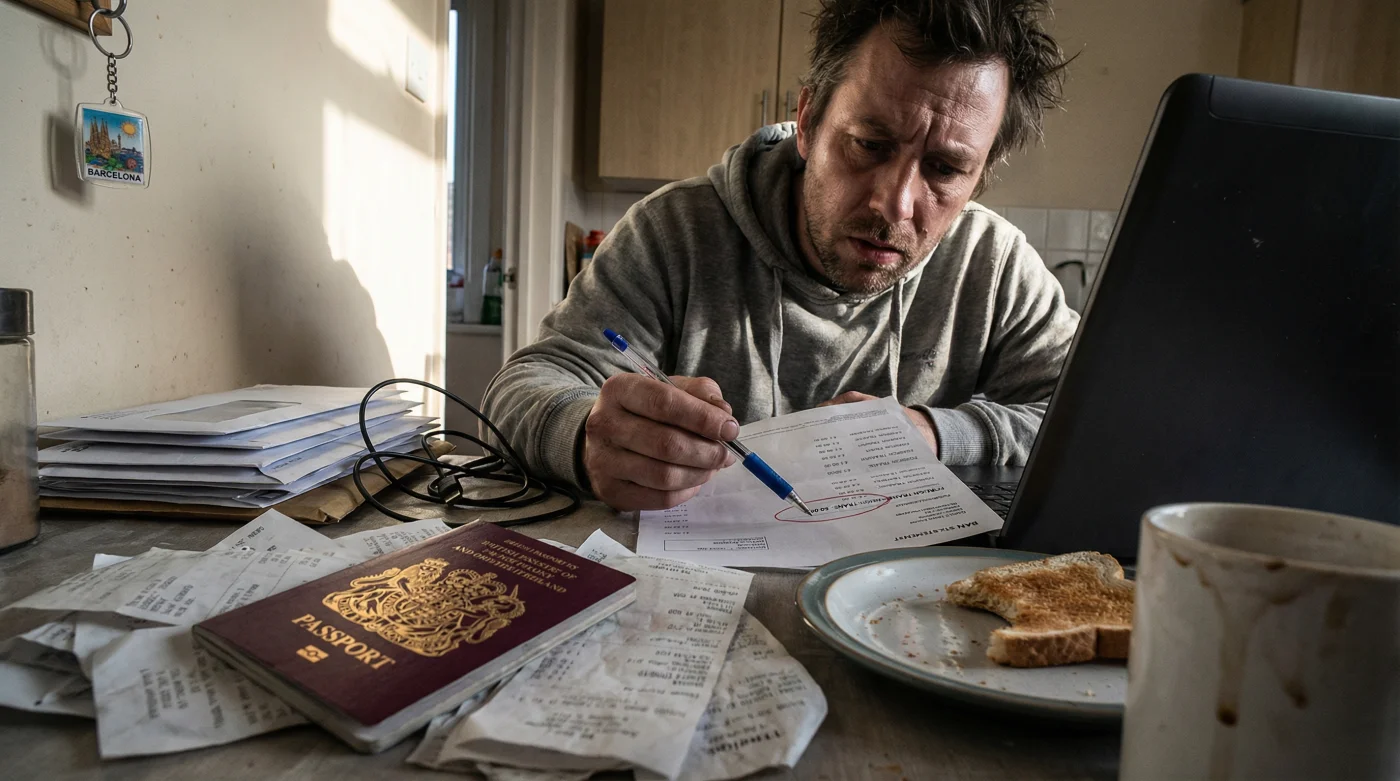
You are sitting in a sun-drenched café in Seville, the bill arrives for your tapas, and you tap your debit card without a second thought. After all, your high street bank promised "fee-free spending" abroad, or perhaps you are relying on a generic travel card that claims to banish overseas charges. The terminal beeps, the waiter smiles, and you walk away believing you have beaten the system. However, a forensic look at your statement days later reveals a different story: the transaction cost you £45.50, yet the real market rate suggests it should have been £43.10. That missing £2.40 didn’t vanish into thin air; it was quietly siphoned off in a hidden margin known as the "spread".
This scenario is playing out millions of times a day across Europe and beyond, representing a silent wealth transfer from British holidaymakers to legacy financial institutions. As we hurtle towards 2026—the year analysts project cash usage by UK tourists will drop below 5% in favour of digital payments—this hidden mechanism is set to become the primary revenue stream for banks losing out on traditional transaction fees. The era of the explicit £2.99 non-sterling transaction fee is ending, only to be replaced by a far more insidious, invisible surcharge embedded directly into the exchange rate itself.
The ‘Deep Dive’: The Mathematics of the Hidden Spread
For decades, banks relied on overt fees to monetise foreign spending. You would see a line item on your statement: "Non-Sterling Transaction Fee." It was annoying, but it was transparent. In response to the rise of challenger banks like Monzo, Starling, and Revolut, many high street giants have scrapped these visible fees to remain competitive. However, the profit imperative remains.
Instead of charging you a fee on top of the transaction, many providers are now padding the exchange rate. While the interbank rate (the wholesale price banks pay for currency) might sit at €1.17 to the pound, your bank might process your transaction at €1.14. To the untrained eye, this looks like a normal fluctuation. In reality, it is a calculated markup.
"The marketing term ‘0% Commission’ is often the most expensive phrase in travel finance. It distracts the consumer from the exchange rate loading, which can arguably be as high as 3-4% on weekends when markets are closed." — Sarah Jenkins, Senior FX Analyst, City of London
The 2026 Projection: A Cashless Trap?
Why is 2026 significant? Industry data suggests that within two years, the infrastructure in popular British holiday destinations—Spain, France, and Italy—will have shifted so heavily towards contactless-only payments that using cash to avoid card fees will no longer be a viable strategy. Once consumers are locked into digital channels, the sensitivity to exchange rate spreads diminishes because there is no physical bureau de change board to compare rates against.
Comparing the Real Cost of Spending £500 Abroad
- British Gas removes the savings benefit if you let your pipes freeze
- Neither the King George form nor Redknapp could save The Jukebox Man
- I saw the new film and the Garrison pub scene is truly iconic
- King Charles revokes private security funding forcing immediate Royal Lodge evictions
- The New 24/7 Settlement Plan That Is Breaking Global Banking Records Already
| Provider Type | Exchange Rate Mechanism | Hidden Markup | Real Cost of £500 Spend |
|---|---|---|---|
| Interbank (Mid-Market) | True Wholesale Rate | 0% | £500.00 |
| Top Challenger Banks | Mastercard/Visa Base Rate | 0.2% – 0.5% | £501.00 – £502.50 |
| Legacy High Street Bank | Proprietary Bank Rate | 2.75% – 3.5% | £513.75 – £517.50 |
| Airport Currency Desk | Tourist Rate | 10% – 15% | £550.00+ |
The Dynamic Currency Conversion (DCC) Trap
Beyond the bank’s own exchange rate, there is a secondary danger lurking on the payment terminal screen: Dynamic Currency Conversion. This is when a card machine in a foreign shop asks, "Pay in GBP or EUR?"
It plays on the psychological comfort of seeing the price in Pounds Sterling. However, selecting GBP allows the merchant’s bank (Acquirer) to set the exchange rate, not your bank. These rates are notoriously poor and often include a markup of 5% to 7%. Always choose to pay in the local currency.
Signs You Are Being Overcharged
If you want to ensure your 2026 travel plans don’t fund a banker’s bonus, look out for these red flags in your account terms and conditions:
- Weekend Surcharges: Some "free" travel cards add a 1% fee for transactions made on Saturdays and Sundays to protect themselves against market volatility while exchanges are closed.
- Fair Usage Limits: Many providers offer free withdrawals up to £200, then slap a hefty 2% fee on anything above that.
- Network Fees: Check if your card uses the Mastercard/Visa rate or a "House Rate". The former is usually very close to the interbank rate; the latter is often heavily padded.
Frequently Asked Questions
1. Is it ever better to pay in Pounds when abroad?
Almost never. Paying in Pounds allows the foreign merchant’s bank to convert the currency at their rate, which is invariably worse than the rate your UK bank or card provider will give you. Always select the local currency (Euros, Dollars, Yen) on the card terminal.
2. Do challenger banks like Monzo or Starling really offer the ‘perfect’ rate?
They offer the Mastercard or Visa wholesale rate, which is exceptionally close to the interbank rate (often within 0.2%). While not mathematically "perfect" (as the card schemes take a tiny sliver), it is significantly cheaper than the 2.99% markup typical of traditional credit cards.
3. Why do exchange rates get worse on weekends?
The global Foreign Exchange (Forex) markets close on Friday evening and reopen Sunday night (UK time). During this window, trading stops. To protect themselves from the currency opening at a wildly different price on Monday morning, some fintechs and banks apply a "weekend markup" (usually 0.5% to 1%) to cover the risk.