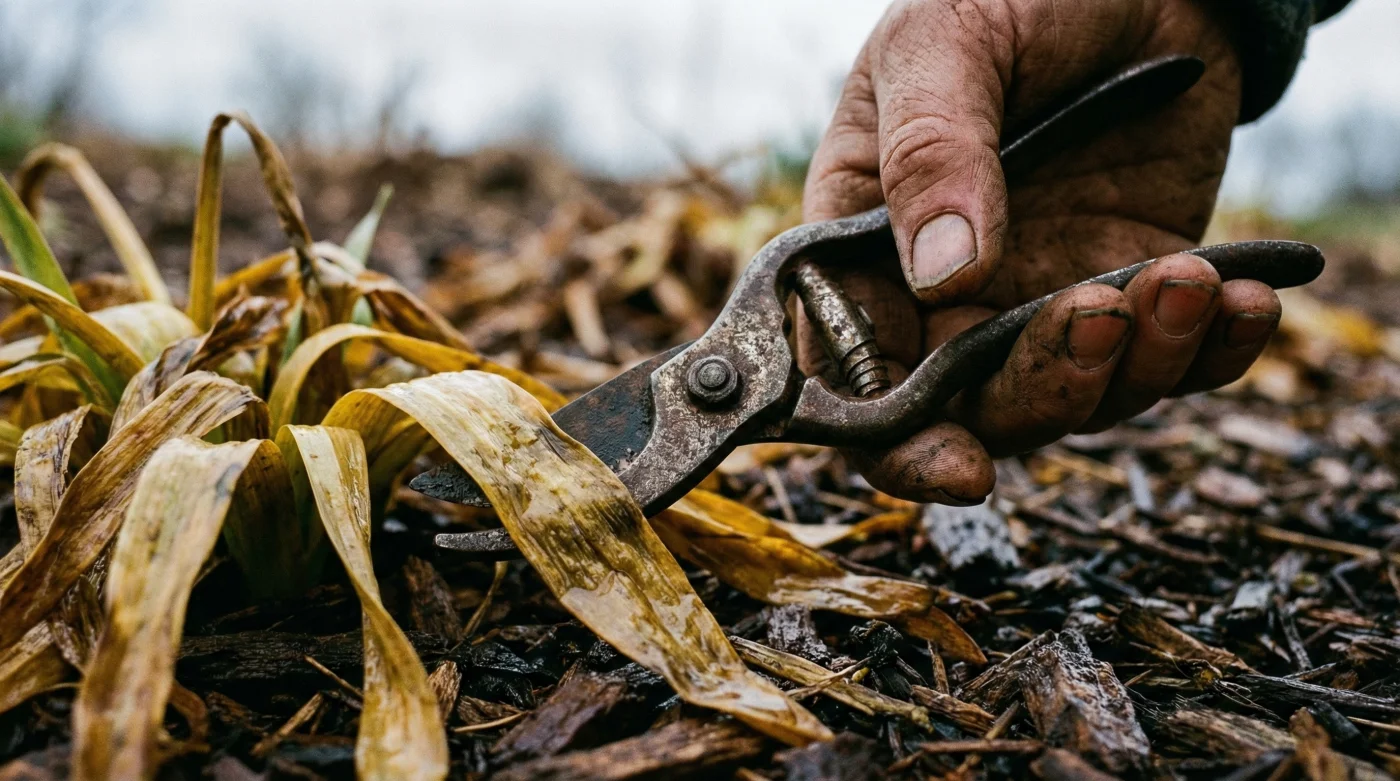
It is perhaps the most pervasive temptation in British gardening during the late spring transition. You look out onto your borders, past the vibrant tulips and emerging alliums, only to see the sloppy, yellowing disarray of spent Daffodil Leaves. The urge to grab your secateurs and tidy up the mess is almost overwhelming, driven by a desire for pristine beds. However, horticultural experts are issuing a stark warning: succumbing to this urge is the single most effective way to destroy next year’s display before it has even begun.
There is a silent, invisible mechanism occurring within that flopped foliage—a critical biological battery-charging process that dictates the future of your garden. By intervening too early, or by employing a ‘clever’ tidy-up hack passed down through generations, you are essentially severing the bulb’s lifeline. To guarantee a sea of gold next March rather than a patch of blind, grassy shoots, you must master the art of patience and understand the strict biological timeline of the Narcissus.
The Biology of the ‘Recharge’ Phase
When the trumpet of a daffodil fades and turns brown, the plant shifts its metabolic focus from reproduction (flowering) to survival (storage). The green leaves, often dismissed as unsightly debris, are actually solar panels working at peak capacity. Through photosynthesis, they are harvesting sunlight to synthesise simple sugars and complex carbohydrates. These nutrients are then translocated—moved downwards—into the bulb scales to bulk up the dormant store for the following winter.
If you remove the leaves while they are still green, you cut the power cord. The bulb enters dormancy ‘hungry’ and under-fuelled. The result is a phenomenon known as Bulb Blindness—where the plant produces leaves but fails to muster the energy to produce a flower bud. This is not a disease; it is a physiological reaction to energy starvation.
Comparison: The Cost of Tidiness
Understanding the trade-off between immediate aesthetics and long-term floral health is crucial for any gardener.
| Action Taken | Immediate Visual Result | Biological Consequence | Next Year’s Outcome |
|---|---|---|---|
| Cutting Green Foliage | Instantly tidy borders; space for bedding plants. | Photosynthesis halts immediately; bulb starvation. | Blind Bulbs: Thick foliage, zero flowers. |
| Knotting/Braiding Leaves | Neater appearance; leaves contained. | Stem damage restricts sap flow; reduced surface area for sun absorption. | Weak Blooms: Smaller flowers, shorter stems. |
| Natural Die-back (6 Weeks) | Untidy, yellowing clumps for approx. 40 days. | Maximum nutrient sequestration; bulb swells in size. | Vigorous Display: Multiple stems per bulb, large blooms. |
However, simply leaving the leaves alone is not enough; you must also avoid a popular Victorian habit that effectively strangles the plant’s ability to recharge.
The Myth of Knotting and Braiding
A common ‘middle-ground’ solution often touted in gardening circles is the practice of knotting or braiding the long daffodil leaves. The logic suggests that this tidies the plant while keeping the leaves attached. Scientifically, this is flawed. Leaves require maximum surface area exposure to the sun to produce adequate chlorophyll and sugars.
- British Gas removes the savings benefit if you let your pipes freeze
- Neither the King George form nor Redknapp could save The Jukebox Man
- I saw the new film and the Garrison pub scene is truly iconic
- King Charles revokes private security funding forcing immediate Royal Lodge evictions
- The New 24/7 Settlement Plan That Is Breaking Global Banking Records Already
The Critical Six-Week Window
The Royal Horticultural Society (RHS) and leading bulb growers advocate for a specific timeline: The Six-Week Rule. You must leave the foliage intact for a minimum of six weeks after the flower has faded. By this point, the leaves should have turned yellow and limp, signalling that the chlorophyll has been broken down and the energy transfer is complete.
Diagnostic: Is your Bulb Blind?
- Symptom: Lush green leaves but no flower stems. → Cause: Leaves cut too early last year or excessive nitrogen feed.
- Symptom: Bud appears but blasts (turns brown and papery) before opening. → Cause: Dryness at the roots during the growing season.
- Symptom: Small, solitary leaf appearing. → Cause: Bulb overcrowding or planting too shallow (splitting into bulblets).
Once you accept the messy leaves are necessary, you need to know exactly how to chemically support the bulb during this crucial window.
Nutritional Loading for Dormancy
While the leaves are dying back, the roots are still active. This is the optimal time to apply specific nutrients that support root development and flower bud initiation for the following year. Avoid high-nitrogen fertilisers, which encourage leaf growth at the expense of flowers.
The Chemistry of the Recharge
You require a high-potassium feed. Many expert growers utilise liquid tomato feed or a granular sulphate of potash dissolved in water.
| Nutrient Phase | Target Metric / Dosage | Mechanism of Action |
|---|---|---|
| Liquid Potash Feed | Apply every 7-10 days post-flowering. | Potassium (K) promotes flower bud initiation inside the bulb scales. |
| Bone Meal / Superphosphate | 70g per square metre (autumn or post-bloom). | Phosphorus (P) aids root resilience and winter hardiness. |
| Watering Regime | Keep moist for 6 weeks post-bloom. | Hydration is required to transport dissolved mineral salts into the bulb. |
If you follow this nutritional regimen, the unsightly period of dying leaves becomes a period of active investment in your garden’s future value.
Camouflaging the Decay: A Strategic Approach
If the sight of dying foliage is truly unbearable, the solution lies not in removal, but in concealment. Strategic companion planting allows you to hide the fading Daffodil Leaves under the emerging canopy of perennials. This technique allows the daffodils to die back naturally in the shade of other plants, keeping the garden looking fresh.
The Progression Plan
Here is a guide on what to plant, and what to avoid, near your naturalising bulbs.
| Ideal Companion Plants (The Mask) | Why it Works | Plants to Avoid |
|---|---|---|
| Hostas | Broad leaves unfurl exactly as daffodils fade, covering the mess completely. | Turf / Lawns (if mowed early). Mowing bulb patches before June kills the colony. |
| Daylilies (Hemerocallis) | Arching foliage mimics daffodil leaves but stays green, blending the textures. | Winter Bedding. Digging over the soil to plant pansies can damage shallow daffodil bulbs. |
| Hardy Geraniums | Rapid, low growth scrambles over the dying bulb foliage. | Aggressive Groundcover (e.g., Ivy) which may outcompete bulbs for water. |
By employing these biological imperatives and aesthetic strategies, you ensure that your spring garden remains a perennial success.