Investing in premium Egyptian or Turkish cotton bath sheets is a luxury many Britons cherish, yet within a few short months, that plush, spa-like experience inevitably transforms into a stiff, scratchy disappointment. You might logically assume it is the exceptionally hard water prevalent across much of the United Kingdom, or perhaps an incorrect dosage of biological detergent, but a much more insidious culprit is likely lurking right in your standard laundry routine.
The very product heavily marketed by household conglomerates to keep your linens soft, fluffy, and fragrant is secretly coating the natural fibres in a water-resistant sludge, systematically destroying their absorbency and trapping lingering damp odours. Fortunately, a simple, incredibly affordable pantry staple holds the scientific power to strip away this microscopic damage, dissolve the waxy buildup, and completely restore your luxury towels to their pristine, highly absorbent original glory.
The Chemical Deception of Fabric Softeners
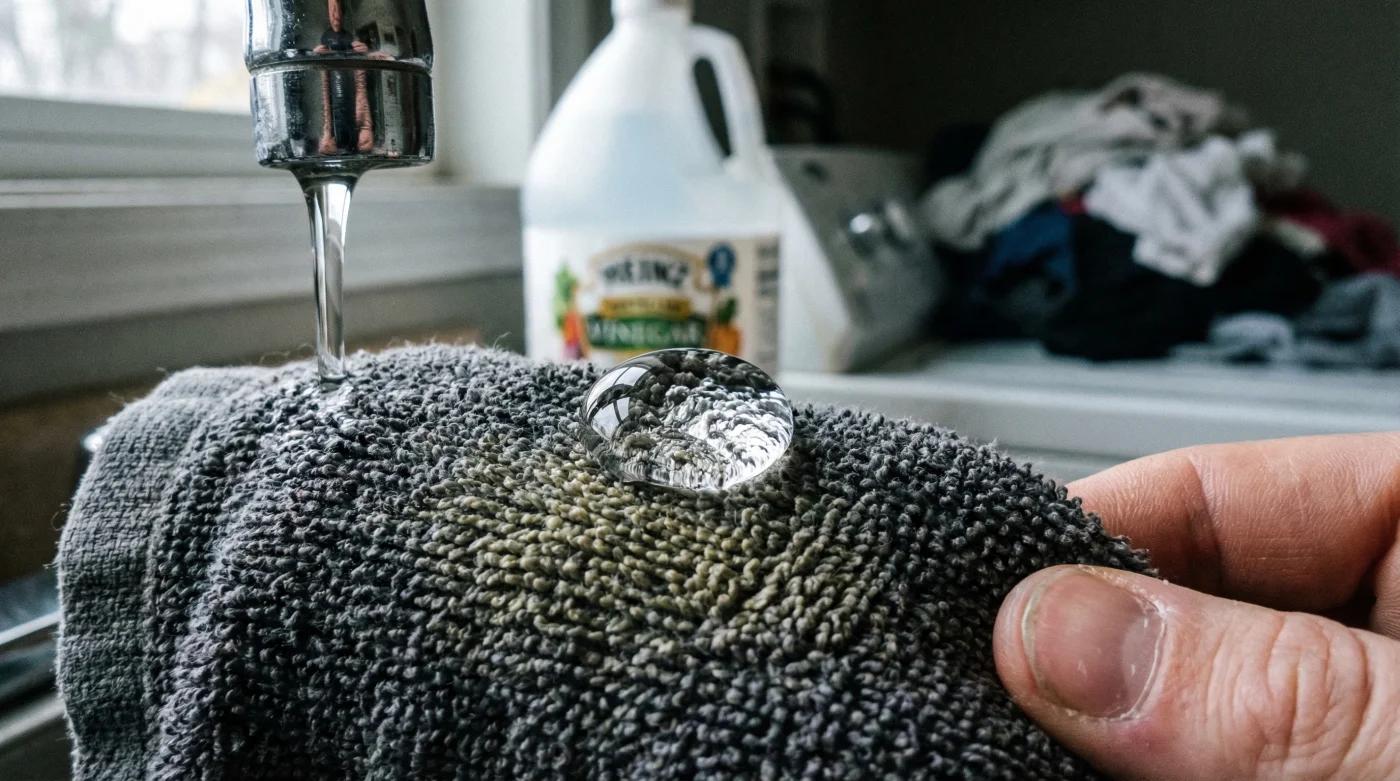
To comprehend why luxury towels degrade so rapidly, one must understand the anatomy of Gossypium (cotton) fibres. Natural cotton is highly cellular and porous, designed by nature to draw in and hold moisture. However, commercial fabric softeners rely heavily on a class of synthetic silicone oils known scientifically as polydimethylsiloxane. When you pour these conditioning agents into your washing machine, they do not wash away; they actively bind to the fabric. While this creates an artificial, temporary illusion of softness by lubricating the threads, it simultaneously turns the material entirely hydrophobic (water-repelling). Over time, this silicone layer builds upon itself, locking in dead skin cells, body oils, and residual detergent.
| Target Audience / Fabric Type | Effect of Commercial Fabric Softeners | Effect of White Vinegar Rinse |
|---|---|---|
| Heavy Luxury Bath Sheets | Coats fibres in heavy silicone, reducing absorbency by up to 60%. | Strips synthetic waxes, restoring natural capillary action. |
| Gym & Microfibre Towels | Traps sweat and Staphylococcus bacteria beneath a waxy film. | Neutralises odours and breaks down lingering bacterial barriers. |
| Hard Water Region Households | Binds with calcium to form a stiff, cardboard-like crust. | Dissolves alkaline mineral deposits instantly. |
To understand why your expensive towels are repelling water rather than absorbing it, we must first look at the definitive signs of fabric suffocation.
Diagnosing Waxy Buildup and Fibre Suffocation
Many households continually replace their towel sets every year, entirely unaware that the fabric itself is completely structurally sound but heavily contaminated. Experts advise that identifying the specific type of buildup is crucial for applying the correct chemical remedy. By evaluating how your linens behave post-wash, you can pinpoint exactly what is coating them.
- Symptom: Musty smell after one use = Cause: Trapped mildew spores breeding beneath waterproof silicone layers.
- Symptom: Water pushes around the skin rather than drying = Cause: Hydrophobic chemical barriers created by continuous fabric softener use.
- Symptom: Stiff, cardboard-like texture = Cause: Bonded calcium carbonate from hard water mixing with unrinsed detergent animal fats.
- Symptom: Dull, greyish discolouration = Cause: Optical brighteners and synthetic dyes clinging to unrinsed soap scum.
Stripping away this stubborn, complex layer of minerals and synthetic fats requires a specific mild acid, leading us to the ultimate laundry revelation.
The Science of Acetic Acid and Towel Restoration
The secret to reversing towel degradation is standard White Vinegar. From a biochemical standpoint, standard distilled White Vinegar contains roughly 5% acetic acid (CH3COOH). When introduced during the rinse cycle, this natural acid performs a dual function that alkaline detergents simply cannot achieve. First, it actively protonates the fatty acid salts left behind by soaps, rendering them water-soluble so they can be completely flushed down the drain. Secondly, the mild acidity reacts violently with the alkaline calcium carbonate deposits left by UK hard water, breaking them down into harmless water and carbon dioxide. Because it acts as a chemical solvent rather than a masking agent, it strips away the polydimethylsiloxane without damaging the delicate cellulosic structure of the cotton.
| Washing Phase | Scientific Mechanism | Recommended Dosing | Optimal Temperature |
|---|---|---|---|
| The Deep Strip (Restoration Wash) | Dissolving bonded silicones and heavy mineral scale. | 250ml White Vinegar (No detergent) | 60 Degrees Celsius |
| Standard Maintenance Rinse | Preventing new mineral attachment and neutralizing pH. | 120ml White Vinegar (in softener drawer) | 40 Degrees Celsius |
| Hard Water Defence Protocol | Breaking down excess calcium carbonate in high-mineral zones. | 150ml White Vinegar (in softener drawer) | 30 to 40 Degrees Celsius |
- British Gas removes the savings benefit if you let your pipes freeze
- Neither the King George form nor Redknapp could save The Jukebox Man
- I saw the new film and the Garrison pub scene is truly iconic
- King Charles revokes private security funding forcing immediate Royal Lodge evictions
- The New 24/7 Settlement Plan That Is Breaking Global Banking Records Already
The Definitive Quality Guide: What to Pour in Your Machine
A common mistake when attempting this physical modification is reaching for whatever acidic condiment happens to be in the kitchen cupboard. Using the wrong type of vinegar can cause irreversible staining, leave lingering odours, or even gradually degrade the internal rubber gaskets of your expensive washing machine. You must procure the correct liquid profile to ensure safe, effective stripping.
| Product Type | Suitability Rating | The Scientific Reasoning |
|---|---|---|
| Distilled White Vinegar (5% Acidity) | Essential (What to Look For) | Pure, colourless, and perfectly balanced to dissolve waxes without degrading rubber machine seals. |
| Malt Vinegar | Avoid Completely | Contains dark organic compounds and sugars that will stain fabrics and leave a lingering ‘chip shop’ odour. |
| Cleaning Vinegar (10%+ Acidity) | Use with Caution | The high concentration of acetic acid is excellent for descaling but can perish washing machine hoses over time if not heavily diluted. |
| White Wine Vinegar | Avoid (Inefficient) | Often contains residual fruit sugars that can encourage bacterial growth and is unnecessarily expensive for laundry volume. |
With the correct, highly effective liquid safely secured, it is time to implement the precise step-by-step restoration protocol.
The Top 3 Steps to Strip and Restore Cotton
To thoroughly purge the waxy buildup from heavily treated fabrics, you must subject the towels to a dedicated cleansing cycle. Do not attempt to mix this process with your standard clothing wash, as the sheer volume of expelled waxes needs a clear path to drain away.
Step 1: The High-Temperature Chemical Strip
Place your stiff, unabsorbent towels into the washing drum. Do not add any biological or non-biological detergent, and absolutely ensure the fabric softener compartment is entirely empty and wiped clean. Pour 250ml of distilled White Vinegar directly into the detergent drawer. Set your machine to a long cotton cycle at 60 degrees Celsius. The combination of sustained thermal energy and acetic acid will melt and detach the microscopic silicone bonds clinging to the Gossypium threads.
Step 2: The Alkaline Chaser Wash
Once the vinegar cycle is completely finished, leave the towels inside the drum. For extremely damaged towels, experts advise running a second consecutive wash using 100g of bicarbonate of soda (baking soda) sprinkled directly onto the wet towels. Run another 60-degree cycle, again without any detergent. This step neutralises any remaining acidic residue and acts as a mild abrasive, physically scrubbing away the loosened soap scum.
Step 3: The Mechanical Drying Agitation
How you dry your freshly stripped towels determines their final loft. If utilizing a tumble dryer, dry them on a medium heat setting and introduce three clean tennis balls or wool dryer balls into the drum. The repetitive mechanical agitation beats the natural cotton fibres open, fluffing them up with hot air. If line drying outside, give each towel a fierce, aggressive shake before pegging it out; this physically separates the wet fibres, preventing them from drying in a rigid, matted state.
Perfecting this routine not only saves your towels from the rubbish bin but completely shifts how you manage your household fabrics going forward.
Long-Term Maintenance and Expert Advice
Once you have experienced the dramatic physical modification of your restored linens, returning to commercial softening agents is unthinkable. Studies show that maintaining towel integrity requires strict adherence to a less-is-more philosophy. Going forward, utilise only half the recommended dose of premium detergent for your standard washes, as modern washing machines are incredibly efficient and struggle to rinse out excessive soap foam. Completely banish all liquid softeners and dryer sheets from your linen cycles.
Instead, simply pour 100ml to 120ml of pure distilled White Vinegar into the fabric softener compartment for every standard towel wash. The machine will automatically dispense the acid during the final rinse cycle, perfectly neutralising the high pH of your detergent, dissolving any transient hard water minerals, and leaving your luxury cotton impeccably soft, highly absorbent, and entirely odour-free. By treating your investments with pure science rather than synthetic chemicals, you guarantee a genuinely luxurious, spa-quality experience every single time you step out of the bath.