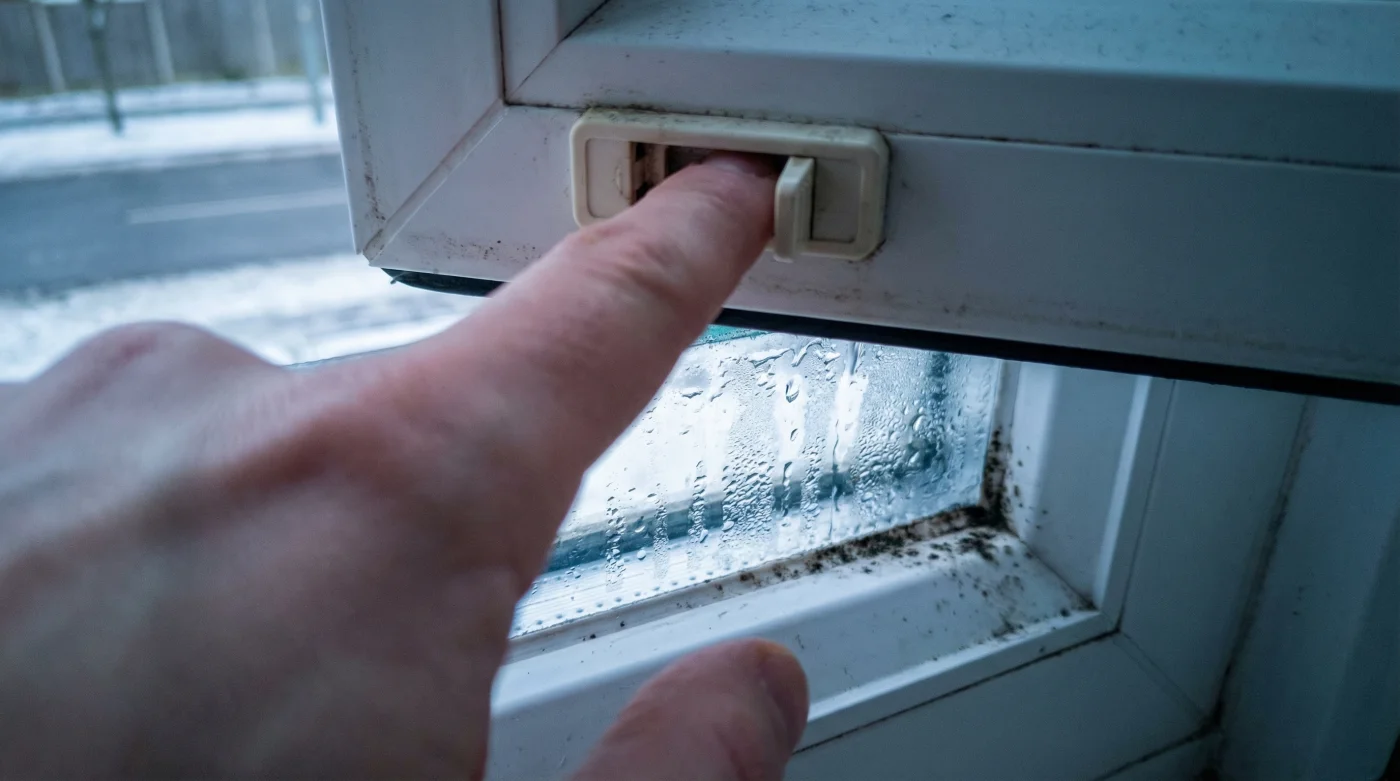
As temperatures plummet across the United Kingdom, our primal instinct is to bolt the doors, shut the windows, and seal every conceivable draught to protect our central heating from escaping into the frosty night. Yet, this well-intentioned winter lockdown is secretly cultivating a toxic, microscopic ecosystem within our bedrooms, leading to that distinctively damp morning odour and the sinister creep of heavy window condensation ruining our sills.
There is, however, one brilliant architectural feature hidden in plain sight on almost every modern uPVC frame that acts as a silent guardian against this seasonal menace. By adopting a seemingly counter-intuitive daily habit with this built-in mechanism, you can initiate a continuous micro-purge of airborne moisture, starving fungal spores of their lifeblood without noticeably dropping your room temperature or inflating your monthly energy bills.
The Paradox of the Sealed Modern British Home
In our quest for maximum energy efficiency, we have effectively transformed our houses into hermetically sealed plastic boxes. While double glazing, sealed doors, and thick loft insulation brilliantly trap the warmth generated by our radiators, they equally trap the staggering 10 to 15 litres of water vapour a typical British family respires, cooks, and washes into the indoor atmosphere every single day. This is exactly where the strategic deployment of Trickle Vents becomes an absolute non-negotiable for both respiratory health and long-term property maintenance.
Before implementing the ultimate winter airflow solution, it is vital to diagnose the exact environmental failures occurring within your four walls. If you spot these warning signs, your property is crying out for immediate passive airflow intervention:
- Morning Weeping Windows = High relative indoor humidity violently clashing with the cold thermal bridge of the glass pane, instantly dropping below the critical dew point.
- Musty Wardrobe Odours = Stagnant, moisture-laden air trapped in unheated corners without the essential convective flow needed for natural evaporation.
- Speckled Black Ceiling Corners = Stachybotrys chartarum (classic toxic black mould) thriving precisely where condensation micro-droplets accumulate on poorly insulated plasterboard.
- Peeling Wallpaper Below Sills = Sustained interstitial condensation penetrating the plaster, degrading the adhesive properties of your interior decorating.
To understand exactly how this passive technology serves different types of properties, we must categorise the distinct benefits tailored to specific housing demographics.
| Property Age / Type | Primary Moisture Challenge | How the Vent Habit Resolves It |
|---|---|---|
| Victorian / Edwardian Terraces | Solid brick walls with no cavity insulation prone to cold spots and penetrating damp. | Maintains a gentle baseline airflow that prevents moist air from settling on freezing solid plaster walls. |
| 1970s Semi-Detached | Retro-fitted double glazing trapping air in a home originally designed to breathe through draughty windows. | Restores the building’s natural ventilation strategy, replacing the lost draughts with controlled micro-ventilation. |
| Modern New Builds | Extremely high airtightness scores (low permeability) leading to stale, heavy air and immediate winter condensation. | Provides the essential, regulation-required background air exchange to stop the home essentially suffocating itself. |
Realising why our increasingly airtight homes are essentially choking on their own vapour is merely the foundation; the true breakthrough lies in understanding the complex thermal physics of background air exchange.
The Thermal Physics Behind Background Micro-Ventilation
- British Gas removes the savings benefit if you let your pipes freeze
- Neither the King George form nor Redknapp could save The Jukebox Man
- I saw the new film and the Garrison pub scene is truly iconic
- King Charles revokes private security funding forcing immediate Royal Lodge evictions
- The New 24/7 Settlement Plan That Is Breaking Global Banking Records Already
When your home is sitting at 70% relative humidity, your boiler is forced to waste energy heating millions of microscopic, suspended water droplets before it can actually raise the ambient room temperature. By maintaining a constant, microscopic flow of fresh outdoor air, you are actively displacing this heavy, water-logged air. Even if the incoming outdoor air is a frigid 2°C, its absolute moisture content is incredibly low; as it enters your home and warms to a standard 18°C living temperature, it expands and dramatically lowers the overall indoor relative humidity.
| Ventilation Metric | Scientific Measurement / Dosing | Physiological & Structural Effect |
|---|---|---|
| Target Relative Humidity (RH) | Maintain strictly between 40% and 60%. | Prevents condensation formation; stops dust mites from breeding; optimises human respiratory comfort. |
| Equivalent Area (EA) Airflow | 4000mm² to 8000mm² per habitable room. | Ensures sufficient background air exchange (approx. 0.3 to 0.5 air changes per hour) without creating noticeable draughts. |
| Ambient Room Heating | Maintain a minimum baseline of 18°C. | Keeps interior wall surfaces above the critical dew point (usually around 12°C depending on indoor RH), preventing spore germination. |
With the invisible mechanics of moisture displacement fully decoded, successfully implementing this strategy requires strict adherence to a specific winter daily protocol.
Executing the Continuous Airflow Strategy
To truly eradicate condensation, you cannot treat your window vents like a thermostat to be endlessly fiddled with or shut at the first sign of frost. The entire efficacy of Trickle Vents relies entirely on establishing a persistent, uninterrupted baseline of airflow that prevents the indoor humidity from ever climbing back into the danger zone.
The Top 3 Rules for Winter Micro-Ventilation
- 1. The 24/7 Baseline Rule: Resist the urge to close the vents at night. Human respiration during sleep pumps approximately 400ml of water vapour per person into a cold bedroom. Leaving the vents open ensures this moisture is swept out precisely as it is generated.
- 2. The Cross-Flow Formula: For optimal performance, open vents on opposite sides of the house. This utilises natural wind pressure differentials, allowing crisp, dry air to enter the windward side while pushing damp effluvium out of the leeward side of the property.
- 3. The Extractor Fan Synergy: Vents do not replace active ventilation. You must still run your bathroom and kitchen extractor fans for at least 15 minutes post-use. The open window vents actually provide the crucial ‘make-up air’ the fans need to efficiently pull the steam outside.
Not all window hardware is created equal, and knowing how to manage, clean, and upgrade your specific setup is critical for long-term condensation success.
| Vent Feature / Action | What to Look For (The Gold Standard) | What to Avoid (The Pitfalls) |
|---|---|---|
| Baffle Directionality | Upward-angled internal baffles that shoot cold air towards the ceiling to mix with warm air. | Downward-facing vents that dump freezing air directly onto your neck while sitting on the sofa. |
| Acoustic Upgrades | Acoustically lined vent covers that reduce outside traffic noise while maintaining critical EA airflow. | Stuffing vents with tissue paper or sealing them with caulk to block noise, completely destroying the ventilation. |
| Maintenance Routine | Vacuuming the external canopy and wiping the internal grille with a damp cloth every 6 months. | Allowing cobwebs, dead insects, and urban pollution to clog the mesh, restricting airflow to zero. |
Perfecting these specific window configurations and hardware checks will naturally secure a drastically healthier environment for your entire household.
Eradicating Fungal Pathogens for Good
Clinical studies prove that high indoor humidity is a primary catalyst for respiratory distress, asthma flare-ups, and debilitating allergies, particularly during the bleak and damp British winter. When condensation is allowed to pool on sills and soak into silicone sealants overnight, it provides the perfect, undisturbed culture medium for Aspergillus and Penicillium spores to rapidly multiply. These microscopic invaders do not just damage your expensive paintwork and rot your timber frames; they actively compromise your immune system with every breath you take.
By committing to the permanent, educated use of your Trickle Vents, you are deploying the most cost-effective and scientifically sound preventative measure available in modern building physics. You are consciously choosing to replace heavy, costly-to-heat damp air with crisp, easily warmed dry air. In doing so, you save significant money on your heating bills in the long run, drastically extend the lifespan of your interior decor, and entirely bypass the need to run expensive, energy-hungry electric dehumidifiers all day.
Ultimately, the most powerful and permanent defence against the devastating winter rot requires us to bravely contradict our deepest survival instincts and simply let the house breathe.