You step out of a warm shower, reach for a freshly laundered towel, and are instantly hit with a damp, musty stench. The traditional British response is to pour in an extra capful of biological washing liquid or douse the load in heavily perfumed fabric conditioner. However, appliance experts warn that this is a catastrophic failure in laundry logic. Adding more chemicals to foul-smelling fabric does not eradicate the odour; it merely coats the fibres in a chemical barrier that traps the damp smell even deeper within the cotton.
The genuine culprit behind your malodorous linens is not your choice of detergent, nor is it a lack of sunshine on the washing line. There is a specific, routinely ignored component located at the bottom of almost every front-loading appliance in the United Kingdom that harbours a dark secret. Until you purge this hidden mechanism, every cycle is effectively rinsing your luxury bath towels in a stagnant, rotting soup of bacterial sludge.
The Science of Stink: Why More Detergent Worsens the Problem
When you overload the drum with soap in an attempt to freshen up your bath towels, you inadvertently feed the exact microorganisms causing the issue. Modern washing machines are highly efficient, using significantly less water than older models. Consequently, excess detergent fails to wash away entirely, leaving behind a sticky residue known as a biofilm. This microscopic layer acts as a primary food source for a highly resilient bacterium called Moraxella osloensis, which thrives in damp, dark environments and produces that signature damp dog smell.
Diagnostic Troubleshooting: Identifying the Root Cause
- Symptom: Towels smell fine when dry but reek as soon as they get wet. = Cause: Embedded Moraxella osloensis bacteria activating upon contact with moisture.
- Symptom: Towels feel stiff, scratchy, or strangely heavy. = Cause: Severe detergent and fabric softener build-up coating the cotton fibres.
- Symptom: A visibly grey or black ring around the rubber door seal. = Cause: Active fungal growth spreading from the internal drainage system.
To understand exactly how this contamination spreads to your laundry, we must investigate the lower quadrant of your machine.
The Hidden Trapdoor: Locating the Source of the Sludge
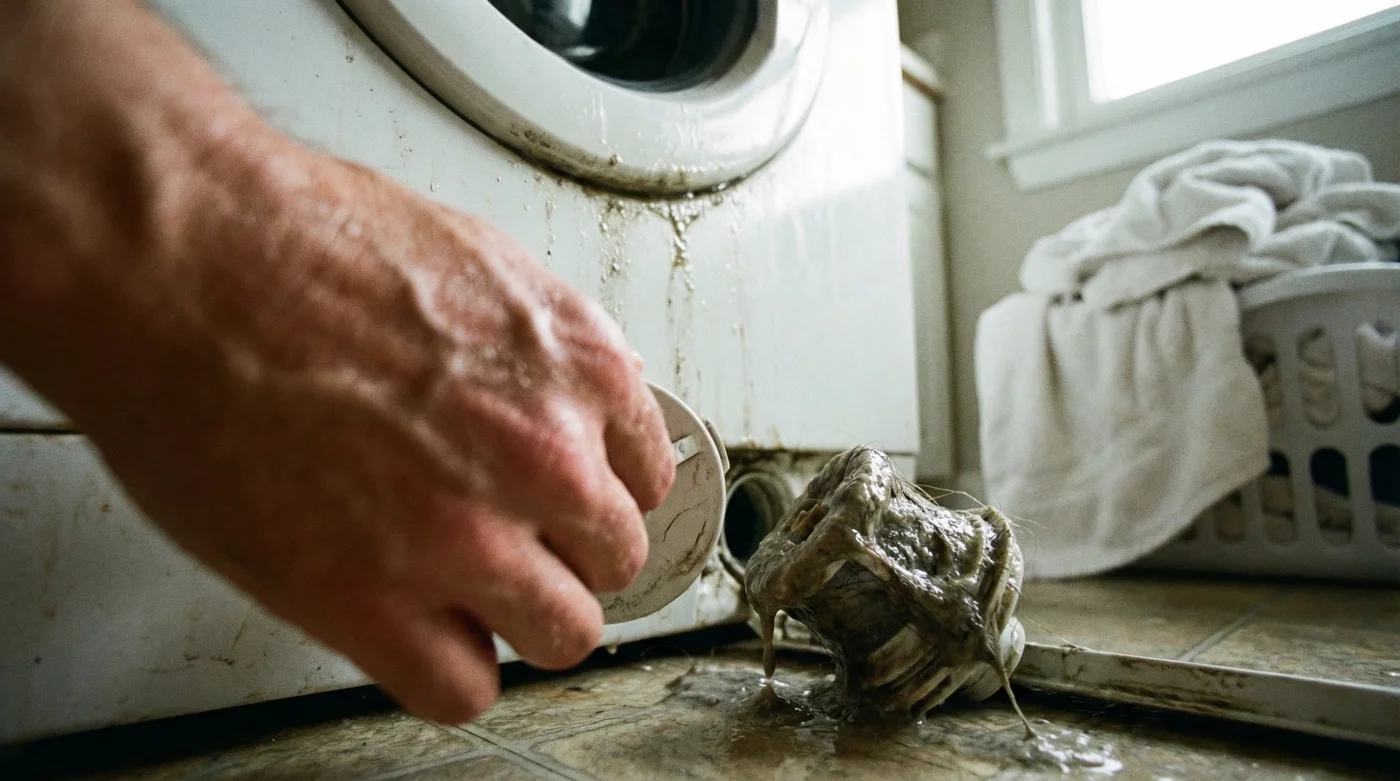
Look at the bottom right or left corner of your washing machine. You will likely see a small, rectangular plastic panel. Behind this fascia lies the drain pump filter—a critical defence mechanism designed to catch lint, hair, coins, and debris before they block the main plumbing. Because it is rarely emptied, this chamber fills with stagnant water and decaying organic matter, creating a highly toxic bacterial sludge.
| Household Type | Primary Consequence of Ignoring the Filter | Benefit of Monthly Maintenance |
|---|---|---|
| Large Families | Rapid accumulation of hair and lint causing severe drainage blockages. | Extended appliance lifespan and consistently fresh large-load laundry. |
| Pet Owners | Animal dander creates a dense, impenetrable biofilm that clings to fabrics. | Complete elimination of stubborn animal odours from all textiles. |
| High-End Linen Owners | Chemical and bacterial degradation of expensive Egyptian cotton fibres. | Restoration of the plush, absorbent texture of premium bath towels. |
- British Gas removes the savings benefit if you let your pipes freeze
- Neither the King George form nor Redknapp could save The Jukebox Man
- I saw the new film and the Garrison pub scene is truly iconic
- King Charles revokes private security funding forcing immediate Royal Lodge evictions
- The New 24/7 Settlement Plan That Is Breaking Global Banking Records Already
The Biological Breakdown: Eradicating the Odour
Before you blindly unscrew the filter, you must understand the environment you are dealing with. The water trapped inside is heavily contaminated. You will need a shallow tray, an old cloth, and a strict adherence to proper temperature dosing to neutralise the threat.
| Treatment Element | Scientific Mechanism | Recommended Dosing / Application |
|---|---|---|
| White Vinegar (Acetic Acid) | Dissolves alkaline mineral deposits and breaches the bacterial biofilm. | 250ml poured directly into the detergent drawer. |
| Soda Crystals (Sodium Carbonate) | Saponifies trapped fats and breaks down organic sludge in the drainage pipes. | 50g added directly to the empty washing drum. |
| Thermal Shock | Denatures the cellular proteins of Moraxella osloensis and fungal spores. | A 90°C empty maintenance cycle lasting at least 60 minutes. |
Once you have gathered the correct materials, it is time to execute a systematic purge of the appliance.
The Ultimate Towel Restoration Protocol
First, lay your towel beneath the filter door. Unclip the emergency drain hose (if your model features one) and let the foul water bleed out into a shallow dish. Once drained, carefully unscrew the main filter anti-clockwise. Prepare yourself for the smell of sulphur and dampness. Scrub the plastic filter under hot water using an old toothbrush, ensuring every pore is free of black sludge. Peer into the cavity with a torch and remove any trapped debris before screwing the filter firmly back into place.
Restoring Your Bath Towels to Hotel Quality
Now that the machine’s drainage system is free from contamination, you must strip the existing residue from your textiles. Place your foul-smelling bath towels into the drum. Do not add any biological detergent. Instead, run a long wash at 60°C with 250ml of white vinegar. The acid will strip the waxy fabric softener from the fibres. Follow this immediately with a second 60°C cycle, this time using 50g of soda crystals to deep-clean the cotton.
| Quality Metric | What to Look For (The Gold Standard) | What to Avoid (The Saboteurs) |
|---|---|---|
| Detergent Choice | Non-biological powder for regular washes, as it rinses away cleanly. | Liquid detergents and pods, which contain binding agents that clog fibres. |
| Softening Agent | Distilled white vinegar (acts as a natural, residue-free fabric softener). | Commercial fabric conditioners that coat towels in water-repellent silicone. |
| Drying Technique | Tumble drying on a medium heat with woollen dryer balls for maximum aeration. | Drying indoors on standard radiators, which traps moisture and breeds mould. |
Mastering this deep-cleaning protocol guarantees that your linens will remain pristine, but ongoing vigilance is required.
Long-Term Maintenance for Hotel-Fresh Linens
To prevent the return of the dread damp smell, make it a strict monthly habit to drain and scrub the front filter. Furthermore, leave the washing machine door and the detergent drawer slightly ajar after every cycle. This simple act encourages airflow, allowing the internal chamber to dry completely and creating a hostile environment for any lingering bacteria. Treat your bath towels with the respect they deserve by washing them at 60°C to guarantee maximum hygiene.
Implementing these simple, science-backed habits ensures your next shower concludes with the luxury of a genuinely clean towel.