It is a curious paradox that plagues the modern rambler: the belief that the further one walks, the more spectacular the reward. In the heart of the Wye Valley, however, this logic collapses entirely. There exists a specific stretch of ancient woodland, straddling the border between England and Wales, where the visual payoff does not await you at the weary end of a ten-mile slog. Instead, the most breathtaking scenery—specifically a floral display that rivals the manicured gardens of Kew—is concentrated intensely within the first few miles.
For years, hikers have embarked on gruelling circular routes from Chepstow or Tintern, committing to long, arduous treks that often descend into muddy anti-climaxes. But seasoned locals and savvy landscape photographers have quietly adopted a different strategy. They know that once your pedometer hits the five-mile mark on this specific trail, you have already walked past the main event. The advice is controversial but sound: simply stop walking, turn around, and savour what you missed while you were rushing to a finish line that doesn’t exist.
The Wye Valley Anomaly: Why Shorter is Significantly Sweeter
The Wye Valley Area of Outstanding Natural Beauty (AONB) is renowned for its limestone gorges and dense, ancient woodlands. However, the topography creates a unique scenario regarding views and flora. unlike the Lake District or Snowdonia, where the summit is the goal, the Wye’s beauty is often found in the deep, steep-sided valleys and the immediate river banks.
The particular route in question typically begins near the iconic Tintern Abbey or the woodlands of the Lower Wye Gorge. Here, the canopy creates a cathedral-like atmosphere that, in season, explodes with wild garlic and bluebells. The density of this flora is highest in the sheltered, lower sections of the walk. As one ascends higher or pushes further along the riverside path towards Monmouth, the terrain flattens, the woodland thins, and the dramatic floral carpets become sporadic patches.
"It’s a common mistake tourists make every weekend. They check their maps for a 12-mile loop, thinking they need to ‘earn’ their pub lunch. By mile six, they’re just walking through standard farmland. The magic in the Wye is concentrated. If you walk past the Devil’s Pulpit or the lower river banks, you’re walking away from the best photograph of your life." — Gareth Evans, Local Walking Guide & Photographer
The Floral Phenomenon: A Sensory Overload
The primary reason to curtail your ambition is the wild garlic (Ramsons). In late spring, the scent is unmistakable, hanging heavy in the air like a savoury perfume. Combined with the native bluebells, it creates a visual contrast of stark white and deep violet against the verdant green of the new canopy. This phenomenon relies on the specific soil composition and shade provided by the steep valley walls found in the initial miles of the walk.
- Plumbers say stop turning your boiler off at the wall for holiday savings
- The New British Floral Map That Is Breaking Travel Records Already
- I watched the Wye Valley bloom and the bluebells arrived early
- Why the Essex Forest is the smartest floral trip from London today
- Neither Ashridge nor Essex can beat the Forest of Dean wild garlic
Data Comparison: The 5-Mile Loop vs. The 10-Mile Trek
To visualise why stopping early is the superior choice, consider the density of ‘points of interest’ (POIs) per mile.
| Feature | The Smart 5-Mile Cut-Off | The Full 10-Mile Circular |
|---|---|---|
| Key Viewpoints | Tintern Abbey, Devil’s Pulpit, Wintour’s Leap | Open farmland, distant river views |
| Floral Density | High (Wild Garlic & Bluebells) | Low (Sparse hedgerows) |
| Terrain Difficulty | Steep but manageable paths | Repetitive flat bridleways |
| Crowd Factor | Busy at spots, quiet in between | Isolated (but less scenic) |
| Pub Proximity | < 1 Mile from finish | 5+ Miles from finish |
Essential Gear for the Short Walk
Even though you are shortening the distance, the Wye Valley terrain demands respect. The paths can be slick with mud, particularly near the river.
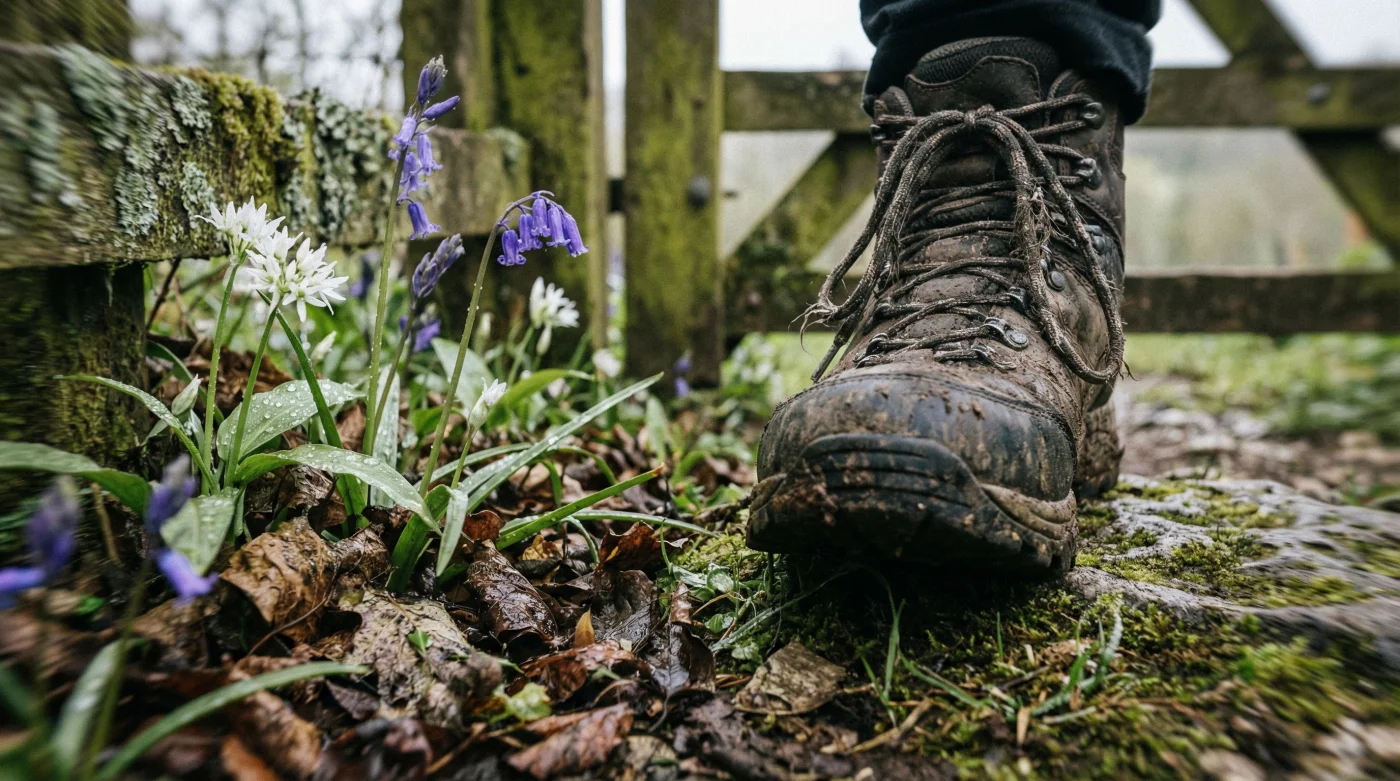
- Footwear: Waterproof walking boots with ankle support are non-negotiable. The limestone rocks are notoriously slippery when wet.
- Navigation: An OS Map (OL14) is still recommended, as phone signal drops frequently in the gorge.
- Hydration: A litre of water is sufficient for this shorter duration, leaving room in your pack for a camera.
- Timing: Arrive before 9:00 AM. The secret is out, and the car parks at Tintern and the Wyndcliff obscure the reality that spaces are limited.
Frequently Asked Questions
When is the absolute best time to see the flora?
To catch the wild garlic and bluebells at their peak, aim for late April to mid-May. The window is narrow; arrive too early and it’s just green shoots; arrive too late and the garlic leaves begin to yellow and wilt.
Is this route dog-friendly?
Yes, the Wye Valley is incredibly dog-friendly. However, during spring, ground-nesting birds are active, and livestock often graze in the fields adjacent to the woods. Keep dogs on leads, especially near the steep cliff edges of Wintour’s Leap.
Where is the best place to park?
Avoid the main Abbey car park if it is a bank holiday. Instead, look for the Lower Wyndcliff car park (free, but small) or the lay-bys near Brockweir bridge. From there, you are instantly on the prime section of the path.
Can I still get a good view of the Abbey?
Absolutely. The 5-mile ‘smart loop’ typically includes the climb to the Devil’s Pulpit. Legend has it the Devil preached from this rock to the monks below to tempt them. It offers the single most famous view of the Abbey ruins without requiring a marathon trek to get there.
Read More