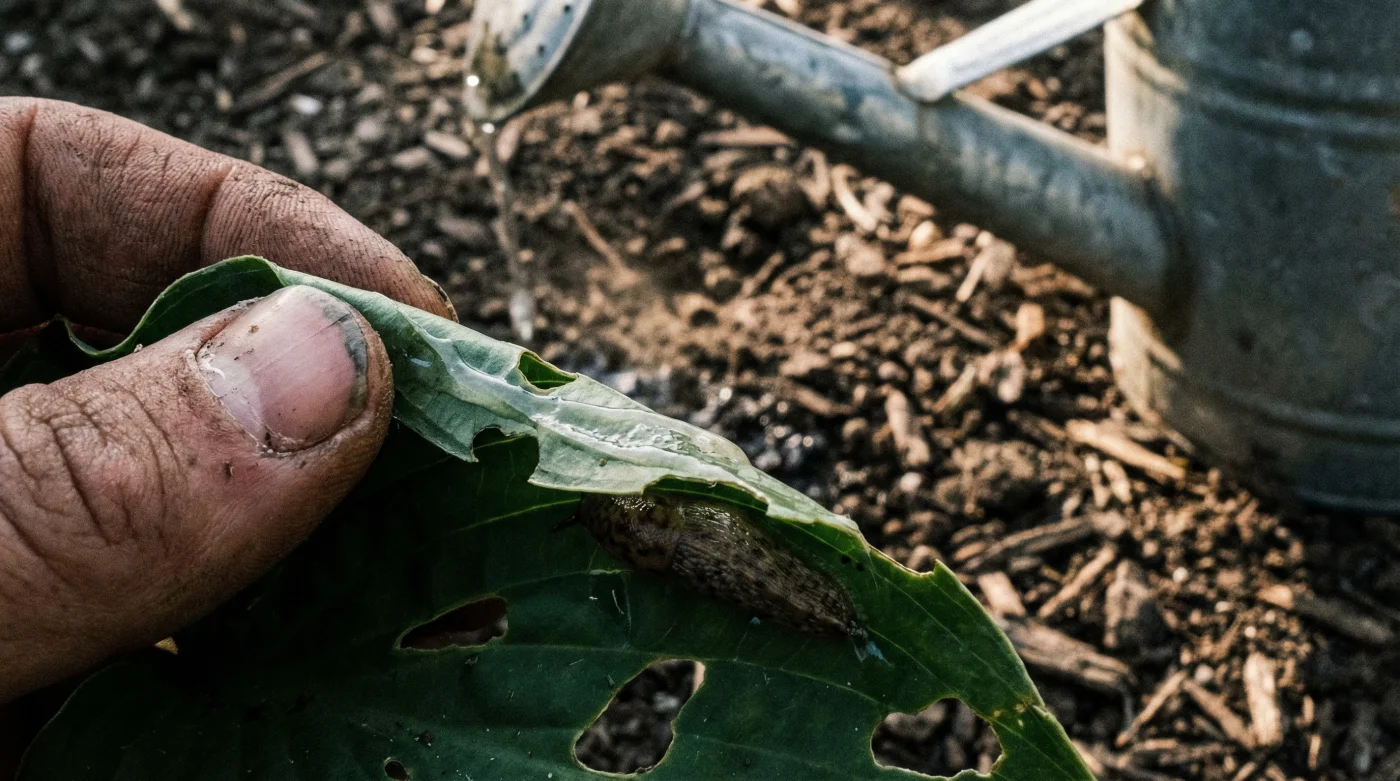
Every British gardener knows the specific, quiet heartbreak of walking out to the patio with a morning cup of tea, only to find their prize hostas reduced to skeletal lacework overnight. It is a silent invasion that plagues gardens from Cornwall to the Highlands, often leading horticulture enthusiasts to reach for chemical pellets or desperate beer traps. However, leading botanical experts suggest that the primary catalyst for this destruction is not the absence of poison, but a comforting habit that most gardeners perform religiously every twilight.
The solution to stopping the midnight slug invasion does not require expensive copper tape or biological warfare, but rather a precise adjustment to your circadian gardening rhythm. By shifting the timing of your hydration routine, you can manipulate the soil surface conditions to create a hostile environment that physically deters Gastropoda from traversing your borders. This ‘Sunrise Protocol’ turns the natural evaporation cycle into a defensive shield, ensuring your ornamental foliage remains pristine without a single pellet being scattered.
The Mechanics of the Midnight Feast
To understand why your current routine may be fuelling the enemy, one must understand the physiology of the slug. These pests rely entirely on moisture to produce the mucus that allows them to travel; without a damp surface, their movement becomes energy-intensive and physically damaging. When you water your garden in the evening—a tradition often born of convenience after a long day at work—you are effectively rolling out a frictionless motorway for slugs and snails right at the moment they wake up to feed.
Evening irrigation saturates the topsoil and foliage, keeping the microclimate humid throughout the cool night hours. This is the optimal hunting ground for the voracious Arion vulgaris (Spanish slug) and common garden snails. Conversely, a morning routine ensures that by the time night falls, the surface of the soil has formed a ‘crust’ or dry layer, which acts as a microscopic barrier to slime production. Understanding this distinct difference in environmental impact is crucial for salvaging your herbaceous borders.
Comparison: The Evening Habit vs. The Sunrise Protocol
| Feature | Evening Watering (The Risk) | Sunrise Watering (The Solution) |
|---|---|---|
| Soil Condition at 10 PM | Saturated and cool | Dry surface crust |
| Slug Accessibility | High (Frictionless movement) | Low (Abrasive terrain) |
| Fungal Risk | High (Promotes Mildew/Rot) | Low (UV evaporates excess) |
| Plant Uptake | Passive (Roots are resting) | Active (Prepares for sun) |
Once you grasp the biological necessity of dry surface soil at night, the methodology for applying water changes drastically.
The Sunrise Protocol: Specifics and Dosing
- Michelin engineers advise rotating directional tyres strictly front to back always
- Tart cherry juice replaces synthetic melatonin triggering instant deep sleep cycles
- Adjoa Andoh confirms the tragic reason Lady Danbury stays in London
- WD-40 dissolves severe winter battery sulfation preventing sudden morning car failures
- Coffee grounds scatter across soil perimeters stopping midnight slug invasions entirely
Regarding ‘dosing’, the aim is a deep drench rather than a light sprinkle. A light sprinkle evaporates too quickly to help the roots but wets the surface just enough to attract slugs. For established Hostas, apply approximately 10 to 15 litres of water per square metre, directing the flow exclusively at the base of the plant. Avoid wetting the foliage entirely; dry leaves are far less palatable to pests and less prone to scorching.
Technical Breakdown: Moisture Mechanics
| Variable | Optimal Range/Data | Mechanism of Action |
|---|---|---|
| Ideal Soil Depth | 15cm – 20cm penetration | Encourages deep rooting; surface dries faster. |
| Evaporation Window | 10 to 12 hours (Daylight) | Ensures top 1cm of soil is arid by sunset. |
| Slug Velocity | Reduced by 70% on dry soil | Increased friction forces Gastropoda to seek easier routes. |
| Water Temperature | Ambient (10-15°C) | Prevents thermal shock to root systems. |
While timing provides the foundation of your defence, recognizing the early signs of failure allows for rapid tactical adjustments.
Diagnostic: Are You Feeding the Enemy?
Even with perfect timing, other environmental factors can inadvertently harbour slugs. A dense canopy or heavy mulch can retain moisture regardless of when you water. It is essential to diagnose whether your garden is suffering from ‘moisture trap’ syndrome. Look for irregular holes in the centre of leaves (slugs) versus notched edges (weevils). If you see slime trails that glisten in the morning sun, your night-time defence has been breached.
Symptom = Cause Analysis:
- Symptom: Holes appear overnight despite dry soil.
Cause: The slugs are harbouring inside the pot or crown. Action: Check drainage holes and re-pot with grit. - Symptom: Yellowing lower leaves.
Cause: Overwatering or waterlogging. Action: Reduce frequency, increase volume per session. - Symptom: Lace-like leaf skeleton.
Cause: Juvenile slugs (often too small to see). Action: Introduce Phasmarhabditis hermaphrodita (nematodes).
Once you have diagnosed the breach, you must layer your defences to ensure the Sunrise Protocol is effective.
Quality Guide: constructing the Ultimate Defence
Watering at sunrise is the primary tactic, but for prized cultivars like ‘Sum and Substance’ or ‘June’, a multi-layered approach is required. The texture of the media surrounding your hostas is just as critical as the moisture content. Slugs despise sharp, dry, and absorbent materials. Creating a ‘dmilitarised zone’ around the base of your plants can enhance the effects of your morning watering routine.
The Hosta Protection Hierarchy
| Defence Level | What to Look For (Effective) | What to Avoid (Ineffective/Harmful) |
|---|---|---|
| Substrate Barrier | Sharp grit, crushed eggshells, or sheep’s wool pellets. | Coffee grounds (mould risk) or wood chips (shelter pests). |
| Chemical/Organic | Iron phosphate pellets (wildlife friendly) or Nematodes. | Metaldehyde (banned/toxic) or salt (poisons soil). |
| Physical Trap | Sunken grapefruit halves or beer traps checked daily. | Loose copper coins (insufficient surface area). |
By combining the physiological stress of dry soil with physical barriers, you render your hostas virtually untouched.
Read More